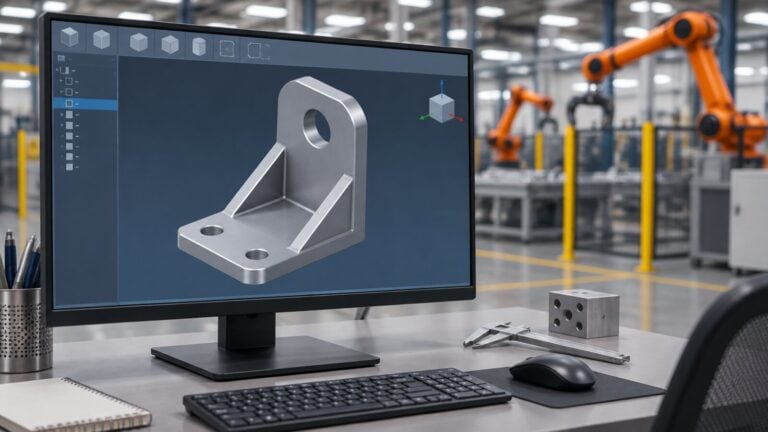
Hardware startups usually build hardware. Solideon took a different route. The company buys off-the-shelf industrial robot arms, the kind used by the thousand in automotive plants, and puts its engineering effort into the software that tells them what to do.
That software is the product. It lets several robots work together on a single part, combining 3D printing in metal with machining, assembly and inspection. Founder and CEO Oluseun Taiwo has summed it up simply.
“What we really do is build robots for deployable microfactories.”
Why buy the robots
The reasoning is practical. Industrial arms are proven, widely available and supported by service networks around the world. A customer at a remote base or a shipyard does not need a one-of-a-kind machine that only the startup can repair. They need something that works with parts and technicians that already exist.
Taiwo has described the hardware in modest terms: off-the-shelf robotic arms that can fit inside a Connex box, the steel shipping container used by the military. The value is in what happens when those arms are coordinated.
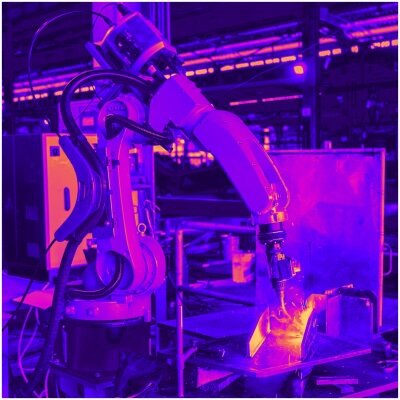
The orchestration layer
Solideon calls its AI orchestration layer Alopium. It plans how a part will be built, splits the work between machines, and keeps them in step. The company says this approach can remove more than 90% of the human intervention in a manufacturing process.
The next step is guidance for the operator. Solideon plans to add onboard AI that walks a user through a build remotely, so that a technician with no robotics or 3D printing background can produce a replacement part in the field.
That matters because the people who need parts most urgently are rarely engineers. They are maintainers, mechanics and crews who need a bracket or a fitting today, not in four months when a supplier can tool up for it.
A software company with a factory floor
Solideon still has a factory, now in a shared space in Inglewood, Los Angeles, and its systems still put real metal down layer by layer. But the bet is the same one that has paid off across computing: standard hardware, specialized software, and a product that improves every time the code does.
The company is now testing that bet with the U.S. Air Force, which funded a deployable manufacturing cell through a $1.25 million AFWERX contract, and with the Navy shipbuilding base in Norfolk, Virginia.