Climate Risk Analysis: What Businesses Need to Know
Climate risk analysis has moved, in the space of a few years, from a niche sustainability exercise to a mainstream input for underwriting, lending, and investment decisions. The shift has been fast enough that many businesses are being asked for a climate risk analysis by an insurer, lender, or investor before they have built any internal understanding of what one actually involves.
Physical Risk and Transition Risk
Climate risk splits into two categories that get analysed very differently. Physical risk covers direct damage from climate hazards, flood, heat, wind, wildfire, drought, to a specific asset or location. Transition risk covers the financial impact of moving to a lower-carbon economy: changing regulation, shifting demand, and repricing of carbon-intensive assets. A business dealing with insurance renewal or a real estate acquisition is usually asking about physical risk specifically, and conflating the two categories tends to produce an analysis that answers the wrong question.
Time Horizons Change the Answer
A one-year view, useful for insurance pricing, looks very different from a thirty-year view, which matters for a long-lived infrastructure asset or a mortgage. Climate hazard probabilities shift meaningfully over these longer horizons as the underlying climate changes, so an analysis needs to state its time horizon explicitly rather than presenting a single risk figure as though it applies uniformly across every future date.
Who Is Actually Asking for This
Insurers use physical climate risk analysis to price and structure commercial property coverage. Real estate and infrastructure investors use it during acquisition due diligence and ongoing portfolio monitoring. Corporates increasingly need it for disclosure requirements and lender due diligence, since financing terms are starting to reflect climate exposure directly. AlphaGeo’s clients span this range, from asset managers such as EQT and Oaktree to insurers such as Zurich, each applying the same underlying analysis to a different decision.
Where the Analysis Actually Adds Value
The value of a climate risk analysis is rarely in confirming that climate risk exists at all, most businesses already assume that it does. The value is in showing which specific assets or decisions carry more risk than others, and by how much, so that limited attention and capital go to the places where they actually change the outcome.
Businesses building out their first climate risk analysis programme, or replacing an outdated one, can use AlphaGeo’s platform to run physical climate risk analysis at the asset level, calibrated to the specific time horizon their decision requires.
Effective climate risk analysis also supports stronger strategic planning by providing decision-makers with consistent, evidence-based insights. Rather than relying on assumptions or broad regional averages, businesses can compare individual assets, identify areas of higher exposure, and prioritise investments that reduce long-term financial risk. This improves resource allocation and ensures that resilience efforts are focused where they will have the greatest impact.
Another important benefit is the ability to revisit and refine the analysis as conditions change. Climate projections, regulatory expectations, and adaptation measures continue to evolve, making periodic updates essential for maintaining an accurate understanding of risk. Businesses that regularly review their assessments are better prepared to respond to changing market conditions and incorporate new information into investment, financing, and operational decisions.
Ultimately, climate risk analysis is most valuable when it becomes part of everyday business planning rather than a standalone reporting exercise. Integrating physical risk insights into acquisition strategies, insurance negotiations, capital planning, and portfolio management enables organisations to make more informed decisions while improving resilience against future climate-related challenges. A structured, asset-level approach provides the clarity needed to balance risk, opportunity, and long-term business performance.
Waiting for a diagnosis can feel like standing in limbo. You know something feels off, you’ve finally worked up the courage to seek help, and now you want answers. Unfortunately, there’s no universal timeline for how long a mental health diagnosis takes. For some people, it happens in a single appointment. For others, it’s a process that unfolds over months. Understanding why this timeline varies can make the wait feel less confusing and a lot less discouraging.
Why There’s No Single Answer
Mental health conditions don’t show up on an X-ray or blood test. Unlike a broken bone or a strep infection, psychological symptoms often overlap across multiple conditions. Anxiety and depression can look similar on the surface. ADHD can mimic anxiety. Trauma responses can resemble mood disorders. Clinicians need time to rule things out, observe patterns, and understand a person’s full history before landing on an accurate diagnosis.
This is why rushing the process can actually backfire. A hasty diagnosis might mean the wrong treatment plan, which wastes time and can leave someone feeling worse, not better.
The First Appointment: What Actually Happens
Many people expect to walk out of their first therapy or psychiatry session with a clear label for what they’re experiencing. In reality, that first appointment is usually just an intake. The clinician gathers background information: your history, current symptoms, family patterns, past treatment, and lifestyle factors. They’re building a foundation, not making a final call.
Some providers can offer a preliminary diagnosis fairly quickly, especially if symptoms are clear-cut and align closely with established criteria. Others prefer to observe how symptoms evolve over a few sessions before committing to a diagnosis. Both approaches are valid. It depends on the complexity of what you’re experiencing and the clinician’s individual style.
Factors That Influence the Timeline
Several variables affect how quickly a diagnosis comes together.
Symptom complexity: Straightforward presentations are easier to diagnose quickly. Overlapping or atypical symptoms take longer to untangle.
Access to care: Long waitlists for specialists, limited availability of psychiatrists, and insurance restrictions can all delay the process before it even begins.
Type of provider: Primary care doctors may offer a general diagnosis quickly, while specialists like psychiatrists or psychologists often conduct more thorough evaluations.
Testing requirements: Conditions like ADHD or autism spectrum disorder often require formal assessments, questionnaires, or neuropsychological testing, which adds time.
Patient history: If you have a complicated medical or psychiatric history, your clinician may need to review previous records or consult with other providers.
Comorbid conditions: Many people experience more than one mental health condition simultaneously, and disentangling which symptoms belong to which diagnosis takes careful evaluation.
When Diagnosis Happens Quickly
Some conditions are diagnosed relatively fast. If someone reports classic symptoms of generalized anxiety or a major depressive episode, and there’s no complicating history, a clinician might feel confident diagnosing within the first or second visit. Acute situations, like a person in crisis, sometimes require faster action so treatment can start immediately, even if the diagnosis gets refined later.
When Diagnosis Takes Longer
Conditions like bipolar disorder, personality disorders, or autism spectrum disorder typically take more time to diagnose accurately. These conditions require observing patterns over weeks or months, sometimes involving input from family members or reviewing behavior across different settings. Misdiagnosis is common in these cases specifically because symptoms can mimic other conditions, so clinicians tend to move cautiously.
What You Can Do While You Wait
The waiting period doesn’t have to be passive. Keeping a symptom journal can help you and your clinician spot patterns more efficiently. Note when symptoms occur, what triggers them, and how intense they feel. Being open and honest during appointments, even about details that feel embarrassing or irrelevant, gives your provider the clearest picture possible.
It also helps to ask questions. If you’re unsure why a diagnosis is taking longer than expected, ask your provider directly. A good clinician will explain their reasoning and give you a realistic sense of what comes next.
The Bigger Picture
A diagnosis is a tool, not a finish line. It exists to guide treatment, not to define who you are. While waiting can feel frustrating, the extra time often leads to a more accurate understanding of what you’re dealing with, and that accuracy matters. Getting it right the first time, even if it takes longer, tends to lead to better outcomes than rushing toward an answer that doesn’t quite fit.
If you’re currently in the process, try to remember that clarity is coming. It might not arrive on your timeline, but it’s coming.
Making Healthcare Information Easier to Understand
Healthcare providers across the United States are constantly looking for better ways to educate patients and communicate complex medical information. From hospitals and clinics to pharmaceutical companies and healthcare technology providers, clear communication has become an essential part of delivering quality care. This is why healthcare explainer videos USA are becoming an increasingly valuable resource for organizations that want to simplify medical concepts and improve patient engagement.
Animated explainer videos transform difficult healthcare topics into easy-to-understand visual stories. Instead of relying on technical documents or lengthy verbal explanations, healthcare organizations can present information through engaging animations, professional narration, and simple language. This helps patients better understand their conditions, treatments, and healthcare services while making them feel more confident in their healthcare decisions.
Why Animated Healthcare Videos Matter
Medical information can often be overwhelming, especially for patients who are unfamiliar with healthcare terminology. Explainer videos simplify these topics by breaking them down into short, informative animations that are easy to follow.
Healthcare organizations commonly use animated videos to explain:
Medical procedures
Treatment plans
Preventive healthcare
Medication instructions
Telemedicine services
Medical devices
Patient onboarding
Public health awareness
By presenting information visually, organizations improve patient understanding while creating a more engaging learning experience.
Supporting Digital Healthcare Communication
Today’s patients often begin their healthcare journey online. Before scheduling appointments, they research symptoms, compare healthcare providers, and explore available treatments. Educational video content helps organizations provide valuable information while improving the overall user experience.
Professional healthcare explainer videos USA can be shared across websites, social media platforms, patient portals, email campaigns, and online presentations. This allows healthcare providers to reach patients wherever they consume digital content while maintaining consistent messaging across every platform.
Videos also encourage visitors to spend more time exploring healthcare websites, helping organizations build credibility and strengthen their online presence.
Strengthening Digital Healthcare Communication
Today, most patients search online before choosing a healthcare provider or learning about a medical condition. Healthcare organizations that include educational videos on their websites create a more engaging experience for visitors.
Animated videos can also be shared through YouTube, LinkedIn, Facebook, Instagram, patient portals, webinars, and email campaigns. This allows organizations to maintain consistent messaging while reaching patients across multiple digital platforms.
Educational content not only improves patient understanding but also helps establish credibility and strengthens an organization’s online presence.
Building Trust Through Clear Communication
Trust is one of the most important factors in healthcare. Patients appreciate providers who take the time to explain procedures, services, and treatment options in a clear and understandable way.
Animated explainer videos reduce confusion by replacing complex medical language with engaging visuals and simple explanations. They help patients feel informed before appointments and provide educational resources they can revisit whenever needed.
As healthcare continues to embrace digital communication, visual storytelling has become one of the most effective ways to educate audiences while building stronger relationships.
Conclusion
The demand for healthcare explainer videos USA continues to grow as healthcare organizations recognize the importance of clear, engaging communication. Animated videos simplify medical information, improve patient education, and support digital healthcare strategies across multiple platforms.
By investing in professional explainer videos, healthcare providers can strengthen patient trust, enhance communication, and deliver educational content that remains valuable for years to come. As the healthcare industry evolves, animation will continue to play an important role in making medical information more accessible and easier to understand.
Truck black box data can help establish fault in an Orlando truck accident by documenting pre-crash speed, braking, maneuvering, throttle activity, seat-belt use, stability-control events, and impact timing.
When preserved promptly and extracted by a qualified examiner, the information can be compared with roadway evidence, witness statements, video, ELD records, and maintenance files.
The Law Offices of Anidjar and Levine can help evaluate whether this evidence reveals delayed braking, unsafe speed, distraction, fatigue, or mechanical problems.
EDR data can show a truck’s speed, throttle activity, braking, and steering immediately before and during an Orlando collision.
Recorded speed can help establish speeding, unsafe speed for conditions, or violations of posted and work-zone limits.
Braking data may reveal delayed reactions, minimal brake application, or whether the driver attempted evasive action.
Stability-control activity, directional inputs, and crash timing can clarify lane changes, swerving, or loss of control.
Qualified technicians must preserve and retrieve EDR data properly so it remains reliable and admissible evidence.
What Is a Truck’s Black Box?
A truck’s black box, formally called an event data recorder (EDR), is an onboard electronic system that captures objective information about the vehicle’s operation before, during, and after a crash. In an Orlando truck accident, the device may be integrated with engine, braking, or safety-control systems rather than functioning as a separate box. Its design and available records vary by manufacturer, vehicle year, and equipment.
Regulatory definitions help distinguish an EDR from broader electronic logging, telematics, and fleet-monitoring technology. Federal rules may address required equipment, preservation, access, or disclosure, while state law can affect whether investigators may obtain and use the information. The accident context also matters: a qualified examiner must identify the specific device, determine whether it recorded the incident, and preserve the original data without alteration. Attorneys serving injured people typically seek prompt preservation through the vehicle owner, carrier, insurer, or court, because routine downloads, repairs, or overwriting could compromise this important electronic record.
What Can Truck Black Box Data Prove?
Once the specific EDR and its limitations are established, its recorded information can help reconstruct the truck’s operation immediately before and during the collision. In an Orlando truck case, counsel may compare that evidence with witness accounts, photographs, roadway conditions, and other records to evaluate fault.
EDR data can help reconstruct a truck’s actions before and during a collision when evaluated alongside other evidence.
Speed: Recorded vehicle speed may help assess speed limit compliance, unsafe acceleration, or excessive speed for conditions.
Braking: Brake application and timing can indicate whether the driver reacted promptly or failed to take reasonable evasive action.
Direction: Direction input may clarify lane changes, swerving, or loss of control before impact.
Impact forces: Collision-related data can help identify the sequence and severity of events.
This information can strengthen incident reconstruction and expose inconsistencies in driver or carrier statements. It may also support claims involving negligent training, supervision, or maintenance when interpreted with other admissible evidence. Because EDR data is not self-explanatory, qualified professionals should preserve, authenticate, and analyze it carefully for injured individuals and their families.
How Is Crash Data Recorded?
Crash data is typically recorded by an Event Data Recorder (EDR), which captures specific vehicle metrics before, during, and after a collision. These metrics may include speed, braking, throttle position, seat-belt status, and airbag deployment. Investigators can retrieve the stored information through qualified forensic procedures, preserving evidence that may support a fault analysis.
Event Data Recorders
Event data recorders (EDRs) capture technical information from a truck’s control systems before, during, and immediately after a collision. These modules typically preserve a brief electronic snapshot when sensors detect a qualifying impact. Their operation can help clarify crash context, but the information requires careful interpretation and authentication.
A triggering event causes the system to preserve available data rather than continuously storing every trip.
Investigators retrieve the file through approved diagnostic equipment or forensic imaging.
Technicians document the vehicle’s condition, module access, and extraction process to protect chain of custody.
Attorneys compare EDR information with photographs, inspections, testimony, and other records.
EDR evidence does not independently determine legal fault. Its evidentiary value depends on reliability, completeness, proper retrieval, and compliance with applicable discovery requirements. Prompt preservation requests can help prevent loss, alteration, or overwriting of relevant electronic evidence.
Recorded Vehicle Metrics
Recorded vehicle metrics can provide a time-sequenced account of a truck’s operation immediately before and during a qualifying collision. Electronic systems may capture speed, throttle position, braking activity, wheel input, engine performance, and changes in acceleration. These measurements can help establish whether a driver reacted, whether braking occurred too late, or whether mechanical conditions contributed to the impact.
Tire pressure monitoring may reveal underinflation or sudden pressure loss relevant to handling and stopping performance. Related data may support suspension behavior analysis, including indications of instability, uneven loading, or component failure. Investigators interpret these measurements alongside physical evidence, inspection findings, roadway conditions, and witness accounts. Properly evaluated metrics can clarify disputed events and help attorneys present a careful, fact-based claim for an injured person seeking accountability and necessary compensation.
Data Storage And Retrieval
Modern trucks store operational and collision-related data in electronic control modules, event data recorders, engine computers, transmission systems, and other onboard devices. These systems preserve information locally, while fleet platforms may transmit records through cloud sync or maintain secure backups. Retrieval often depends on the manufacturer, module type, software, and preservation timing. A qualified investigator can identify relevant sources before routine overwriting or repairs destroy evidence.
Module imaging: Experts create forensic copies without altering original data.
Access logs: Retrieval records help establish who handled the information.
Retention policies: Fleet and manufacturer practices may determine availability.
Chain of custody: Documented transfers support admissibility and credibility.
Counsel may issue preservation demands, subpoenas, or requests for inspection when necessary. Comparing retrieved data with maintenance records, dispatch materials, photographs, and witness accounts can reveal inconsistencies. Careful preservation allows evidence to serve injured people seeking accountability and fair compensation after an Orlando truck accident.
Which Crash Details Can the Data Show?
Black box data can show essential crash details, including the truck’s speed, braking, throttle activity, guidance input, seat-belt use, and changes in speed immediately before impact. It may also preserve lane change records, throttle position, engine diagnostics, brake pressure, and the vehicle’s acceleration profile. Stability control activity can indicate whether electronic systems detected loss of traction or directional control. Recorded longitudinal G forces may help reconstruct the forces involved and assess collision severity without relying solely on post-crash impressions. Investigators can compare these records with photographs, roadway evidence, driver statements, and witness accounts to determine how events unfolded. The data may identify whether braking occurred, whether steering input preceded contact, and whether mechanical warnings were present. It may therefore support a careful, evidence-based evaluation of responsibility while helping protect injured people from unsupported assumptions. Because recording capabilities vary by truck and module, qualified professionals should preserve, interpret, and authenticate the information before presenting conclusions to insurers, courts, or families seeking accountability.
What Speed Data Says About Fault
Speed data can show a truck’s pre-crash velocity and whether it exceeded the posted speed limit. Records of sudden braking may indicate when the driver perceived a hazard and whether a timely response was attempted. Compared with witness accounts, roadway evidence, and applicable traffic laws, these findings can help establish fault and support an injured party’s claim.
Pre-Crash Vehicle Speed
A truck’s pre-crash speed data can show whether its driver exceeded a posted limit, traveled too fast for traffic or road conditions, or failed to reduce speed before impact. Event data recorders may preserve speed profiles, throttle activity, and timing before a collision, helping establish what the driver perceived and did.
Sudden braking: Braking intervals may indicate a delayed response or an attempted emergency action.
Driver compliance: Recorded conduct can be compared with company policies, training expectations, and safe-operation duties.
Impact sequence: Speed changes may clarify whether force developed before or during the collision.
Attorneys can preserve the vehicle, obtain download reports, and compare records with crash-scene evidence and witness accounts. Careful analysis helps serve injured clients without overstating conclusions, while identifying inconsistencies that may support fault, causation, and damages.
Speed Limit Comparisons
When recorded speed is compared with the posted limit and applicable road conditions, it may help establish whether the truck driver operated unlawfully or unsafely before the crash. Black box Traffic speed data can be measured against signs, work zones, weather, and roadway design. A meaningful comparison may support arguments involving excessive speed, inadequate adjustment, or compliance.
Evidence
Comparison
Potential significance
Recorded speed
Posted limit
Possible violation
Recorded speed
Work-zone limit
Enhanced risk
Speed trend
Road conditions
Unsafe adjustment
Speed and location
Signal timing
Intersection context
Signal timing records, mapping data, and photographs can help establish whether speed affected a driver’s ability to approach or clear an intersection lawfully. Counsel may use these comparisons with other evidence to present a careful, fact-based account of responsibility and support injured individuals seeking fair compensation.
Sudden Braking Evidence
Sudden braking recorded by a truck’s event data recorder may help show how the driver responded to a developing hazard and whether that response was timely and appropriate. Speed data can place braking within the seconds before impact, helping investigators assess following distance, reaction time, and stopping opportunity. Through event reconstruction, experts may compare recorded speed with roadway conditions, traffic movement, and vehicle weight.
A sharp speed reduction may indicate emergency braking.
Delayed braking can support arguments concerning inattention or unsafe following.
Continued speed despite a visible hazard may strengthen a negligence claim.
Conflicting records require careful technical review.
The data does not automatically establish fault. An attorney may preserve the recorder, obtain maintenance and inspection records, and compare its information with physical evidence, video, witness accounts, and electronic logs. Proper speed analysis can clarify disputed events and help protect injured people seeking fair compensation.
What Braking Data Shows Before Impact
Braking data from a truck’s event data recorder can show whether the driver applied the brakes before impact, when braking began, and how forcefully the system was engaged. This information may help establish whether a reasonable opportunity existed to avoid or lessen the collision.
Investigators can compare recorded brake application, vehicle speed, and elapsed time with roadway evidence, visibility conditions, traffic signals, and witness accounts. A delayed response, minimal brake pressure, or no recorded application may support questions about driver attention, fatigue, training, or compliance with safety duties. Conversely, prompt, forceful braking may clarify that the driver attempted to respond, while raising separate issues concerning roadway hazards or mechanical performance.
Electronic logs can place the vehicle’s operation within the driver’s service hours and identify possible fatigue concerns. The truck’s maintenance history may show whether braking components were inspected, repaired, or reported defective. Proper interpretation requires preserving the original data and correlating it with physical evidence, because black box records inform fault analysis but rarely establish responsibility alone.
How Steering Data Helps Reconstruct the Crash
Steering input records can show how the truck was navigated immediately before and during impact. When compared with vehicle positions, roadway evidence, and witness accounts, this data helps reconstruct the crash path and identify unsafe driving actions. Such evidence may clarify whether driver conduct or another factor contributed to the collision.
Steering Input Records
During an Orlando truck accident investigation, recorded guiding inputs can show how the driver responded immediately before and during the collision. Electronic control modules may preserve steering-wheel angle, steering torque, correction frequency, and timing. Properly interpreted, those records can help distinguish deliberate evasive action from delayed, limited, or absent response. Investigators may compare the data with witness accounts, roadway conditions, and inspection findings, including the Road Surface and Brake Temperatures. Four details can be particularly significant:
Sudden steering changes may indicate an attempted avoidance maneuver.
Minimal input may support claims of distraction, impairment, or mechanical difficulty.
Repeated corrections can reveal loss of control or unstable handling.
Timing can test whether testimony matches recorded vehicle steering behavior.
Counsel can preserve original files, verify calibration, and obtain qualified interpretation, protecting injured people from conclusions based on incomplete or altered evidence.
Crash Path Reconstruction
Crash path reconstruction uses recorded controlling inputs to connect the truck’s movements with the moments immediately preceding impact. Handling data may show whether a driver maintained, changed, or abruptly corrected lane position, while motion sensors can document yaw, roll, acceleration, and directional changes. Investigators compare these records with braking patterns, roadway evidence, vehicle damage, and witness accounts to determine how the collision developed. Data may also identify precrash impacts or evasive actions that are difficult to establish from photographs alone. When properly preserved and interpreted, the electronic record can clarify timing, vehicle control, and whether the truck crossed a boundary or failed to respond appropriately. This analysis helps attorneys present an evidence-based account for injured clients and supports fair responsibility determinations during negotiations or litigation in Orlando courts.
Can Black Box Data Prove Driver Fatigue?
Black box data can support a claim that driver fatigue contributed to an Orlando truck accident by documenting extended driving hours, inadequate rest periods, or vehicle operation outside recorded hours-of-service limits. Although it may not directly measure alertness, the information can corroborate witness accounts, medical findings, and crash-scene evidence.
Timing patterns: Speed, braking, and road-control records may reveal prolonged operation or delayed reactions before impact.
Performance changes: Erratic lane control, repeated hard braking, or unexplained acceleration can support fatigue-related impairment.
Corroborating evidence: Cell phone usage records, dispatch communications, and wearable biometric data may clarify whether the driver was distracted, sleep-deprived, or otherwise impaired.
Independent review: A qualified reconstructionist can compare electronic data with testimony and physical evidence without assuming fatigue solely from a collision.
Because fatigue has multiple causes, black box information generally strengthens, rather than independently proves, the claim. Attorneys can preserve the data promptly and present it carefully to protect injured people’s rights and support fair accountability.
How ELD Records Reveal Hours-of-Service Violations
ELD records document a truck driver’s hours behind the wheel and can reveal whether logged service time exceeded federal limits. They may also show missed or shortened rest breaks required to reduce fatigue-related risks. In an Orlando truck accident claim, these entries can provide objective evidence supporting allegations of regulatory violations and negligence.
Driver Hours Tracking
Because commercial drivers must comply with federal hours-of-service limits, electronic logging device (ELD) records can provide objective evidence of whether a truck driver exceeded allowable driving or on-duty periods before an Orlando collision. Properly preserved records may show:
Driving time and duty-status changes.
Unidentified driving that conflicts with claimed off-duty periods.
Location data matching routes, fuel stops, and crash timing.
Edits, certifications, or gaps requiring further investigation.
Attorneys can compare ELD information with dispatch records, bills of lading, mobile-device data, and witness accounts. That comparison supports a reliable Risk assessment and may identify fatigue indicators relevant to unsafe operation. ELD evidence can also reveal whether a carrier failed to monitor compliance or accepted inaccurate entries. Because electronic records may be overwritten, counsel serving injured clients should promptly request preservation and obtain certified copies. A focused review helps establish chronology, challenge disputed testimony, and present regulators or jurors with objective proof.
Rest Break Violations
Beyond total driving hours, ELD records can show whether a commercial driver took required rest breaks before an Orlando truck accident. These electronic logs document when driving began, when duty status changed, and whether the driver recorded the required off-duty intervals. Missing, shortened, or improperly documented breaks may indicate an hours-of-service violation and support an argument that fatigue contributed to the collision.
Attorneys can compare ELD data with dispatch messages, fuel receipts, GPS information, toll records, and witness accounts. That comparison may reveal inconsistencies between reported Duty Logging and actual activity, including unlogged work or continuous operation. Reviewing Driver Hours in that scenario helps establish whether the carrier or driver disregarded safety requirements. Preserving these records promptly can protect injured individuals and support a fair, evidence-based claim.
When Data Points to Mechanical Failure
When black box data shows braking irregularities, guidance-system warnings, engine faults, or other mechanical anomalies before a crash, it may support a claim that equipment failure contributed to the Orlando truck accident. The data does not automatically establish liability, but it can direct investigators toward reliable, testable evidence.
Brake temperature analysis may reveal overheating, uneven braking, or conditions consistent with worn components.
Fault code correlation can compare electronic alerts with maintenance records, inspection findings, and the collision timeline.
Speed, control input, throttle, and pressure readings may show whether the truck responded normally when the driver attempted to avoid impact.
Downloaded records should be preserved carefully, with attention to timestamps, calibration, retrieval methods, and possible data gaps.
Qualified reconstruction professionals can interpret these measurements alongside physical evidence and service documentation. For injured individuals and families, preserving mechanical-failure evidence may clarify what occurred, protect accurate claims, and support informed legal decisions without assuming conclusions unsupported by the record.
What Black Box Evidence Says About Company Negligence
Black box data may support a company-negligence claim when it reveals conduct or conditions tied to inadequate training, unrealistic delivery schedules, poor supervision, or deficient maintenance. Records showing extended driving periods, repeated speeding, harsh braking, or minimal rest may help establish Driver Fatigue and possible Hours of Service violations. When those patterns appear alongside dispatch messages, payroll records, or inspection documents, they may indicate that a carrier encouraged unsafe performance or failed to enforce safety policies.
The evidence does not automatically prove liability. Investigators must consider who controlled scheduling, whether supervisors received warnings, and whether the data accurately reflects the vehicle and driver involved. A qualified attorney may compare electronic records with logs, maintenance histories, and witness accounts to identify preventable corporate decisions. This analysis can help an injured person pursue accountability from responsible entities, rather than attributing the collision solely to an individual driver. It also may demonstrate that safer practices could have protected the public and prevented the harm.
Why Truck Black Box Data Must Be Preserved
Preserving truck black box data is important because these records may be overwritten, altered, or lost through routine vehicle operation, repairs, software updates, or replacement of the recording module. Prompt action protects an injured person’s opportunity to establish what occurred and who may be responsible.
Protect the evidence chain: Identifying and preserving original files helps demonstrate authenticity and prevents questions about missing or changed information.
Reduce spoliation risk: A written demand can direct trucking companies and insurers to suspend ordinary deletion practices.
Support legal preservation: Counsel may seek a preservation agreement, court order, or other remedy when evidence appears threatened.
Strengthen document retention: Maintenance records, inspection reports, driver logs, and electronic data should be collected for meaningful comparison.
Preservation is particularly important when a truck is repaired, sold, handed over, transferred, or placed back into service. Failure to safeguard relevant evidence may impair fair evaluation and, in some circumstances, support sanctions or adverse inferences. Acting promptly serves clients by protecting reliable facts before they disappear.
Who Retrieves and Analyzes the Data?
Qualified collision-reconstruction professionals, forensic technicians, or authorized data-retrieval specialists typically extract truck black box information using manufacturer-approved tools and documented procedures. Their work helps protect the reliability of evidence that may clarify speed, braking, steer, seat-belt use, and other pre-impact conditions.
Attorneys may coordinate access with the trucking company, insurer, vehicle owner, or investigating agencies. When appropriate, a court order or formal preservation demand can help ensure qualified personnel conduct the download without altering the module or surrounding vehicle components.
Proper evidence handling includes documenting the module’s condition, recording who possessed it, and maintaining a clear chain custody from collection through courtroom presentation. Specialists create forensic copies rather than relying solely on software displays, preserving original information for independent review.
Accident-reconstruction engineers and other qualified experts then perform expert analysis, comparing recorded events with photographs, physical damage, witness accounts, maintenance records, and roadway evidence. Data validation confirms that timestamps, units, sensor readings, and vehicle identification information are interpreted correctly, giving decision-makers a dependable foundation for evaluating responsibility and pursuing fair compensation.
What If the Black Box Data Is Missing?
When black box data is unavailable, fault may still be established through other evidence, including vehicle damage, event-scene measurements, surveillance footage, witness testimony, driver logs, electronic logging records, maintenance files, and cellular or dispatch records. These sources can help reconstruct events and identify unsafe conduct.
Preserve immediately: Attorneys may send preservation letters to carriers, fleet owners, and insurers, addressing spoliation risk before records are overwritten, repaired, or discarded.
Compare physical evidence: Damage patterns, skid marks, debris, and photographs may support or challenge competing accounts.
Confirm human observations: Witness corroboration can strengthen testimony concerning speed, lane position, distraction, or traffic signals.
Challenge unsupported denials: Alternative evidence may expose inconsistencies during insurance disputes and support a fair liability evaluation.
A missing module does not automatically defeat a claim. Its absence may result from malfunction, post-crash repairs, retention policies, or intentional destruction. Counsel can investigate custody, request related records, and seek court remedies when preservation duties were violated. Careful evidence collection helps protect injured people and promotes an accurate, compassionate resolution.
How Data Strengthens an Orlando Truck Claim?
Even without black box data, a well-supported evidence record can strengthen an Orlando truck claim by guiding the crash to specific conduct, such as speeding, unsafe lane changes, driver fatigue, or inadequate maintenance. Police reports, photographs, surveillance footage, witness accounts, electronic logging records, inspection documents, and dispatch communications may establish Driver behavior and reveal a speed inconsistency between the driver’s statement and physical evidence. Maintenance histories can show whether defective brakes, tires, or steering components contributed to the collision. Medical records and employment documentation can also connect the event to measurable injuries and financial losses. This evidence helps counsel apply applicable Liability standards to the driver, carrier, maintenance provider, or other responsible parties. It can also support a focused insurance strategy by challenging unsupported denials, preserving negotiating leverage, and identifying coverage issues early. A careful investigation serves injured individuals by presenting reliable facts, protecting their rights, and helping decision-makers evaluate responsibility and fair compensation. Insurers may respond more responsibly when documentation clearly links each claimed loss to the crash.
Frequently Asked Questions
Can Black Box Data Be Used in Settlement Negotiations or Trial?
Black box data can support settlement strategy and trial presentation by documenting speed, braking, and hours. Attorneys assess evidentiary challenges, authenticate records, address limitations, and use reliable findings to advocate for injured clients.
Are Truck Black Box Records Admissible as Evidence in Florida Courts?
Truck black-box records may be admissible in Florida courts when authenticated, reliably collected, and relevant. Legal counsel evaluates data access, hearsay exceptions, preservation, and admissibility standards while addressing challenges to accuracy, completeness, or tampering.
How Long Do Trucking Companies Typically Retain Black Box Information?
Trucking companies typically retain black box information for weeks or months, but policies vary. Digital retention may be overwritten quickly, while state regulation, litigation holds, and preservation requests can extend availability for claimants.
Can Victims Request Black Box Data Before Filing an Orlando Truck Lawsuit?
Yes. During a preliminary investigation, victims or their attorneys can request black box data informally and send a preservation request, helping prevent alteration or deletion before filing an Orlando truck lawsuit.
What Privacy Concerns Affect Access to a Truck’s Black Box Records?
Privacy concerns can restrict black-box access through driver-identifying information, employer ownership claims, and data access limits. Electronic logging concerns require careful handling, protective orders, and narrowly tailored requests balancing evidence preservation with individual privacy rights.
—————————
Black box data can provide objective evidence in an Orlando truck accident by documenting speed, braking, turning, and vehicle performance before impact. Properly preserved and professionally analyzed, these records may clarify disputed facts, identify regulatory or driver violations, and support claims for compensation. Because trucking companies may control this information, prompt legal action from The Law Offices of Anidjar and Levine can help preserve critical evidence before it is altered or lost. An Orlando Truck Accident Lawyer can also use black box records alongside witness statements, medical records, and scene evidence to strengthen fault and damages arguments.
Erectile dysfunction has moved out of the shadows and into the spotlight, and with that shift has come a wave of new treatment options. Among the most talked-about are PRP (platelet-rich plasma) and stem cell therapies, often marketed as revolutionary alternatives to pills and injections. But what’s actually happening in these treatments, and do they live up to the hype? Understanding the science behind regenerative medicine can help men make informed decisions about their sexual health rather than chasing the latest trend.
What Is Regenerative Medicine, Exactly?
Regenerative medicine is a branch of medical science focused on repairing or replacing damaged tissue using the body’s own healing mechanisms. Rather than masking symptoms, the goal is to encourage genuine tissue repair at a cellular level. For ED treatment, this typically means targeting the blood vessels and nerve tissue in the penis that are responsible for achieving and maintaining an erection.
This approach differs fundamentally from traditional ED medications, which work by temporarily increasing blood flow. Regenerative therapies aim for something more lasting: actual structural improvement of the tissue involved in erectile function.
How PRP Therapy Works
PRP therapy starts with a simple blood draw, similar to a routine lab test. That blood is then spun in a centrifuge to separate and concentrate the platelets, which contain growth factors known to stimulate healing. This platelet-rich concentrate is then injected directly into specific areas of the penis.
The theory behind PRP for ED treatment is that these concentrated growth factors can stimulate the growth of new blood vessels and nerve tissue, potentially improving blood flow and sensitivity over time. Because the treatment uses a man’s own blood, the risk of allergic reaction or rejection is minimal.
Stem Cell Therapy: A Different Mechanism
Stem cell therapy takes a related but distinct approach. Stem cells have the unique ability to develop into different types of cells, which makes them appealing for repairing damaged tissue. In the context of ED treatment, stem cells are typically harvested from a man’s own fat tissue or bone marrow, then processed and injected into the penile tissue.
The hope is that these cells will help regenerate damaged nerve endings and blood vessels, addressing some of the underlying physical causes of erectile dysfunction rather than just the symptoms. Early research, much of it still in preliminary stages, suggests potential benefit for certain men, particularly those whose ED stems from nerve damage following prostate surgery or from vascular insufficiency.
Setting Realistic Expectations
One of the biggest challenges facing PRP and stem cell therapy is the gap between marketing claims and clinical reality. Some clinics promote these treatments as guaranteed cures, which isn’t supported by the current body of research. Men considering these options should approach them as potentially helpful tools rather than definitive solutions.
Cost is another consideration. These therapies are typically not covered by insurance, and prices can add up quickly, especially since some clinics recommend multiple sessions for meaningful results.
The type and severity of ED also matter. Men with mild vascular-related dysfunction may see more benefit than those with severe nerve damage or ED tied to psychological factors, which won’t respond to a physical intervention alone.
What Men Should Ask Before Trying These Treatments
Before pursuing PRP or stem cell therapy, it’s worth asking a provider some direct questions. What does the published research actually show for a specific condition? What’s the provider’s experience level with this exact procedure? Are there realistic before-and-after outcomes from previous patients, and how long did those results last?
It’s also wise to have a straightforward conversation with a urologist about all available ED treatment options, including established therapies with a longer track record, before committing to something newer and less proven. Sometimes the most effective path combines multiple approaches rather than relying on a single treatment.
The Bottom Line
PRP and stem cell therapies represent an exciting frontier in men’s sexual health, and the underlying science is genuinely promising. But promising isn’t the same as proven. Men exploring these treatments should do so with clear eyes, realistic expectations, and a healthy dose of skepticism toward providers who promise guaranteed results. As research continues to mature, these therapies may become a more reliable part of the ED treatment landscape. For now, they’re best approached as one option among many, not a magic fix.
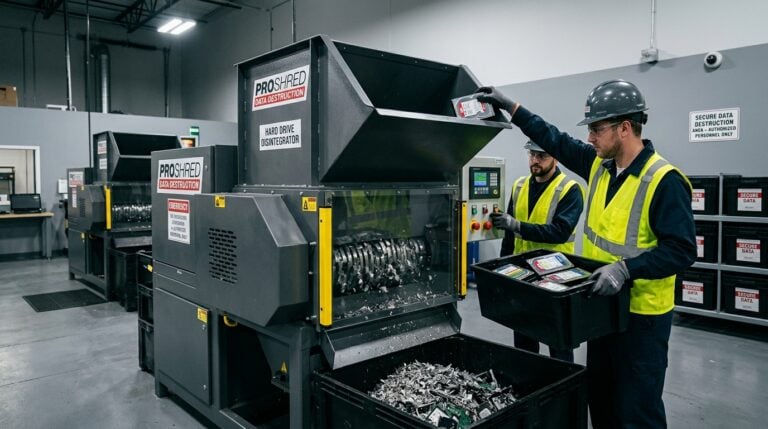
Media destruction services exist because no business can afford to discover, after the fact, that sensitive data left the building on a device that was supposed to be empty. The range of physical media in a typical organisation that stores recoverable data is far wider than most people account for when planning a disposal project. Laptops and servers come to mind immediately. Backup tapes, USB drives, photocopier hard drives, smartphones, and optical discs are frequently overlooked. Each category represents exposure if it leaves the organisation without certified destruction.
The Full Scope of Media That Requires Treatment
A thorough media destruction programme accounts for every category of physical storage that has passed through the organisation.
Hard disk drives and solid-state drives from desktops, laptops, and servers
Backup tapes and tape libraries holding archived data from past years
USB flash drives and external portable hard drives, which circulate freely in most offices
Optical discs including CDs and DVDs used for distribution or archiving
Mobile phones and tablets, which hold email, contact data, and application data in device memory
Photocopier and multifunction printer drives, which store images of every document processed
Network-attached storage systems and SAN arrays
Memory cards from cameras, industrial equipment, and portable devices
The breadth of this list is why informal disposal approaches create systemic risk. Equipment handed to a recycler without screening, donated to charity without wiping, or sold through an online marketplace without certified destruction can expose data from any of these categories.
Standards That Define Certified Destruction
Media destruction services that meet recognised standards give organisations documented assurance that data cannot be recovered regardless of the tools applied. The applicable standard for most storage media is NIST Special Publication 800-88, which defines three levels of sanitisation:
Clear: Overwriting accessible data, appropriate for media being reused within a controlled internal environment.
Purge: Thorough sanitisation appropriate for media leaving the organisation’s control, using methods that defeat forensic recovery tools.
Destroy: Physical destruction for media where software-based methods cannot be applied, where the data classification requires maximum assurance, or where the media is non-functional.
A professional provider applies the appropriate method based on the media type, the condition of the device, and the intended downstream disposition. This calibration is what distinguishes a genuine service from one that applies a single generic process regardless of what the situation requires.
Compliance Obligations in Singapore
Singapore’s Personal Data Protection Act requires organisations to destroy personal data that is no longer needed, and to certify that destruction has occurred. The Personal Data Protection Commission enforces this requirement and has investigated cases where media was disposed of without adequate destruction, resulting in data exposure. Organisations can reference PDPC advisory guidelines on data management obligations for current guidance on disposal requirements.
The NEA’s e-waste regulations require that electronic media containing hazardous materials is processed through licensed downstream recyclers. Physical destruction that feeds into an unlicensed downstream does not satisfy Singapore’s environmental compliance requirements.
As Minister for Sustainability and the Environment Grace Fu has observed, “Responsible organisations manage not just what they produce but what they retire.” Certified media destruction is the direct application of that principle to IT operations.
In-House Versus Professional Destruction
Some organisations consider building an in-house media destruction capability. The calculation looks straightforward but involves costs that are easy to underestimate. Industrial-grade shredders capable of reducing hard drives to fragments that preclude recovery are expensive capital items requiring maintenance and periodic recertification. Operating them requires trained staff and documented procedures. And in-house destruction places the full liability for any process failure on the organisation itself, without the professional indemnity insurance that a certified provider carries.
TD ITAD provides professional media destruction services in Singapore covering the full range of physical storage categories, with on-site destruction available at client premises for the most sensitive situations and secure transport for standard projects. Destruction certificates are issued per device for individual drives and per batch for smaller media items.
The Documentation That Matters
The chain of custody record generated by certified media destruction is evidence – evidence that specific devices containing specific data were destroyed by a specific method on a specific date. This record satisfies the auditor’s question, withstands a regulatory investigation, and provides the basis for an organisation to demonstrate compliance rather than merely claim it.
Organisations that rely on informal disposal arrangements, or that perform destruction internally without generating individual device records, discover the gap in their documentation only when it is too late to fill it. Building the documentation into the process from the start is the only approach that provides genuine assurance.
For Singapore businesses managing the full range of their physical storage media at end-of-life, professional media destruction services with certified outcomes and per-device documentation is the standard the regulatory environment now expects.
ISO container specifications exist because the global freight system requires every container in circulation to behave predictably at every point in the supply chain. When a container leaves Singapore, it needs to fit the ship’s cell guides, stack safely at the destination port, and transfer to a truck chassis without special arrangements. The specifications that make this possible – dimensions, corner casting geometry, structural load ratings, and door seal standards – are the product of decades of international standardisation work, and they are what makes the shipping container the most efficient unit load device in the history of trade.
Understanding the Core Specifications
The ISO 668 standard governs external dimensions. A 20-foot standard unit is 6,058mm long, 2,438mm wide, and 2,591mm tall. A 40-foot standard unit is 12,192mm long with the same width and height. High-cube variants of both sizes add 305mm of height, bringing the external dimension to 2,896mm. Internal dimensions are slightly smaller due to wall and floor thickness, with usable floor area of approximately 13.9 square metres for a 20-foot unit and 28.1 square metres for a 40-foot unit.
The ISO 1496 standard governs structural and testing requirements. Corner castings must withstand the stacking loads of containers fully loaded above them – a standard 20-foot stack can exceed 200 tonnes. Racking resistance requirements address the lateral forces the container experiences during lifting and ship motion. Weatherproofing requirements ensure the container body and door seals maintain integrity under water pressure testing.
How These Specifications Serve Modern Logistics
The specification’s value in modern logistics is its universality. Every crane at every significant port in the world is designed around the corner casting position of an ISO standard container. Every truck chassis is built to carry them. Every ship is designed with cell guides sized to hold them. The result is a logistics system where cargo can be packed once and unpacked once, at origin and destination, regardless of the number of transport modes and handoffs in between.
For Singapore’s logistics operators, ISO container compatibility with the Port of Singapore Authority’s handling infrastructure is a baseline requirement for any container entering the maritime trade. Containers that do not meet ISO specifications cannot be handled by standard equipment and cannot enter the port’s container handling systems.
Storage and Site Applications in Singapore
Beyond freight use, ISO container specifications create practical advantages for storage and site applications in Singapore. A container that meets ISO dimensions fits onto a standard tilt-tray or side-loader delivery truck. It can be placed on a standard truck chassis. It can be crane-lifted using standard spreader bars or chains attached to the corner castings.
For businesses deploying containers across multiple sites in Singapore, construction projects, industrial operations, event facilities, this means that moving a container from one location to another requires no special equipment. A standard contract truck does the job, and the container arrives ready to resume its function without any reconfiguration.
As Senior Minister Tharman Shanmugaratnam has noted about Singapore’s role in global trade, “Standards are the language of commerce, and Singapore speaks that language fluently.” ISO container specifications are part of that language.
Singapore’s Maritime and Port Authority provides resources on container operations within Singapore’s port system. Operators can reference MPA’s container trade resources for current port standards and requirements applicable to container movement through Singapore.
Selecting ISO Containers for Specific Uses
Different applications draw on different aspects of the ISO specification.
For freight use, the structural integrity ratings are the primary consideration, along with the weatherproofing certification that confirms the container is fit for an additional voyage.
For storage applications, the weatherproofing characteristics and door seal quality determine how well the container protects its contents from Singapore’s tropical humidity and heavy rainfall.
For conversion projects, offices, retail spaces, workshops – the internal dimensions determine the usable floor plan, and the structural integrity of the corner castings and wall corrugations determines what modifications can be made without compromising the container’s stability.
ISO container specifications from Infinex Containers cover the full standard range, with units sourced from established container lines and graded for condition before sale. For businesses and developers in Singapore whose applications require certified ISO dimensions and structural standards, sourcing from a supplier who can verify the specification of each unit is the foundation of a purchase that delivers what the application requires.
For any organisation where ISO standard containers are integral to operations, understanding the specification behind the product ensures informed decisions that match the unit to the use.
Utility patents protect how something works. Design patents protect how it looks. Over the last decade both have grown, but they remain very different in volume, term, and cost. The U.S. Patent and Trademark Office issues utility patents in the hundreds of thousands each year and design patents in the tens of thousands. Knowing the trend lines helps an inventor decide which protection, or which combination, fits a given product.
The core difference
A utility patent covers function: a mechanism, a process, a chemical formula, the way a device operates. A design patent covers ornamental appearance: the shape of a bottle, the contour of a tool handle, the look of a screen icon. The same product can qualify for both, because a novel function and a distinctive appearance are separate things.
The terms differ too. A utility patent lasts 20 years from its filing date. A design patent filed on or after May 13, 2015 lasts 15 years from grant, a change tied to the United States joining the Hague system for industrial designs. Utility applications also go through a longer examination and cost more, while design applications are generally faster and cheaper to prosecute.
Examination timelines reflect that split. Utility patents commonly take one to three years to issue, depending on the technology and the USPTO backlog, because an examiner must assess the claimed function against prior art in detail. Design applications, which turn on a single set of drawings rather than written claims about function, generally move faster. For an inventor planning a product launch, that timing difference can shape which protection to pursue first.
Volume over the last decade
Utility patents dominate the count. The USPTO issued 326,921 patents of all types in fiscal year 2024, and utility patents are the large majority of that figure. An independent analysis by Anaqua, using its patent analytics software, found total USPTO grants rose 5.7 percent to 368,597 for the December 2023 to November 2024 window, up from 348,774 in the prior period. The patent law commentary site Patently-O noted that utility grants in 2024, while strong, remained below the 2019 peak of more than 350,000.
Design patents are a smaller stream that has been climbing. They run in the tens of thousands of grants per year, a fraction of utility volume, but their share has grown as product appearance became a sharper competitive factor. The rise in design disputes underlines the trend: Lex Machina reported that design patent litigation jumped 34.2 percent in 2024, a sign that more companies are filing and defending design rights.
Why design filings have climbed
Two forces explain the growth. First, e-commerce made the visual identity of a product central to whether it sells, so protecting a recognizable look carries real weight. Second, design patents are quicker and less expensive to obtain than utility patents, which makes them attractive for products where the innovation is as much in the form as in the function. For consumer goods, packaging, and accessories, a design patent often does the protective work that matters most.
Choosing between them, or using both
For many inventors the answer is not either-or. A product with a genuinely new mechanism and a distinctive look can warrant a utility application for the function and a design application for the appearance. A product whose novelty is mostly visual may need only a design patent. The decision turns on where the real innovation lives and what a competitor would most likely copy.
Both routes share one practical requirement: clear, accurate drawings. Design patent applications in particular stand or fall on their figures, since the drawings define the protected appearance. This is one reason inventors increasingly start with professional renderings and CAD. Enhance Innovations, a product development firm working since 2010 from Champlin, Minnesota, produces photorealistic renderings and CAD models as its core deliverable, the same digital assets that feed both a strong design application and a manufacturer-ready presentation.
Reading the trend lines
The decade’s data shows a mature utility system issuing more than 300,000 patents a year and a smaller design system growing in both filings and disputes. Neither figure tells an inventor which patent to seek. That depends on the product. What the numbers do show is that design protection has moved from an afterthought to a deliberate strategy for a rising share of filers.
This article is general information based on USPTO and published analytics data, not legal advice. An inventor weighing utility versus design protection should confirm current rules and fees with the USPTO or a qualified patent professional.
From 2013 to 2023, commercial insurance costs have nearly doubled. Following this trend, it can be estimated that insurance costs in 2030 can be as much as $4,890. This is due to a number of factors, such as inflation or severe weather events. But, regardless of the cause, there are still some measures to keep insurance premiums lower now and in the future.
One of the most common discounts for commercial insurance is by getting your annual roof inspection done. While the report alone is usually enough for a credit, this inspection has a compounding effect. Since any deficiencies are being located in the roof, surprise roof damage is much less likely to happen. In turn, this ensures you can proactively get maintenance done and avoid any claims that would skyrocket your insurance policy’s premium.
Depending on the location of the building, certain maintenance might be more necessary than others. For example, homes in the Midwest can keep their insurance costs down by installing heat tape to prevent snow buildup in the winter months. In more coastal locations, drain cleaning is much more important due to heavy rain.
Ultimately, proactive roof maintenance not only serves to lower insurance costs but it also ensures the roof’s longevity. In order to keep premiums low, taking preventative steps and getting frequent inspections are absolutely essential.
Growing a business in Anaheim comes with real opportunities — and real challenges. As local companies expand, their technology needs grow more complex. Hiring full in-house IT teams, upgrading infrastructure, and keeping systems secure all demand time, money, and expertise that many businesses simply don’t have in abundance. That’s where managed IT services step in.
Managed IT services give Anaheim businesses access to enterprise-level technology support without the overhead of building it from scratch. For companies looking to scale, that’s a significant advantage.
Predictable Costs That Support Growth
One of the biggest obstacles to scaling is unpredictable spending. A sudden server failure or a cybersecurity breach can derail a growth plan overnight. Managed IT services operate on a fixed monthly model, turning technology expenses into a predictable line item. This makes budgeting easier and removes the financial surprises that often slow businesses down.
Rather than reacting to problems after they happen, managed services providers (MSPs) monitor systems proactively. They catch issues before they become expensive disasters — keeping operations running smoothly as your business grows.
Scalable Infrastructure Without the Headaches
Scaling means adding employees, opening new locations, or expanding your digital footprint. Each step requires your IT environment to keep pace. With managed IT services, Anaheim businesses can scale their infrastructure up or down based on actual needs — without waiting weeks to hire IT staff or months to deploy new hardware.
Cloud solutions, remote desktop environments, and network monitoring all become easier to manage through an MSP. Whether you’re onboarding five new employees or fifty, the technology side of that growth stays aligned with your business goals.
Enhanced Security as You Grow
Growth naturally expands your attack surface. More endpoints, more users, and more data mean more potential vulnerabilities. For Anaheim companies operating in competitive industries — healthcare, retail, manufacturing, logistics — that’s not a risk worth taking lightly.
Managed IT services include layered cybersecurity protections: endpoint monitoring, threat detection, patch management, and employee security training. As your company scales, these protections scale with you. You don’t need to hire a dedicated security team to maintain strong defenses.
Access to Expertise Without Hiring Full-Time Staff
Recruitment is expensive and time-consuming. Finding qualified IT professionals in Southern California’s competitive job market takes months — and retaining them costs even more. Managed IT services give Anaheim businesses immediate access to a full team of specialists across networking, cloud, cybersecurity, and compliance.
This depth of expertise is difficult to replicate internally, especially for small and mid-sized businesses. An MSP brings knowledge across many industries and environments, which often translates to faster problem-solving and smarter long-term technology decisions.
Staying Focused on the Business, Not the Technology
Perhaps the most underrated benefit of managed IT services is focus. Business owners and leadership teams have enough to manage without troubleshooting network outages or worrying about data backup failures. When IT is handled by a dedicated provider, internal teams can direct their energy toward what they do best.
For Anaheim companies looking to grow, that clarity of focus can be a genuine competitive edge.
The Bottom Line
Scaling a business requires the right foundation. Managed IT services provide Anaheim companies with reliable infrastructure, expert support, predictable costs, and strong security — all built to grow alongside the business. Whether you’re just beginning to scale or already in the middle of rapid expansion, a trusted MSP can make the process smoother, faster, and more sustainable.