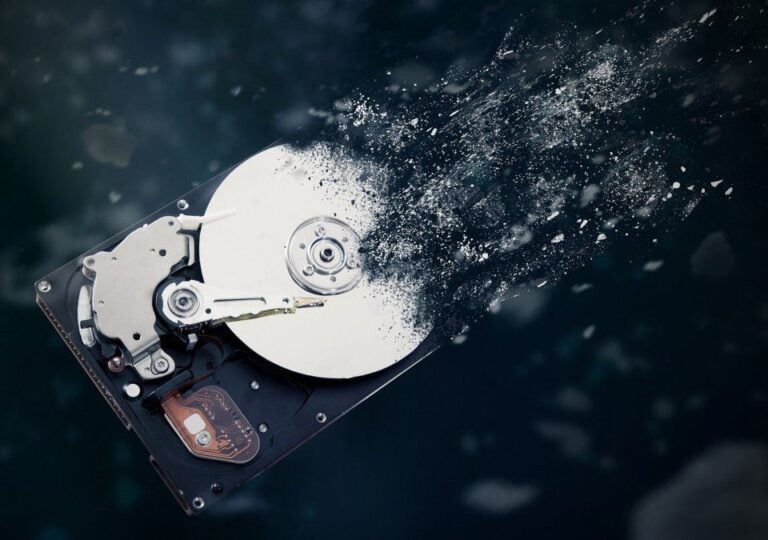
There is a version of IT disposal that looks responsible from a distance and falls apart on inspection. An internal technician runs a format, ticks a box on a spreadsheet, and the device is passed on. Nothing about that sequence produces evidence, and nothing about it accounts for the parts of a drive a format never reaches. Erasure done properly is a controlled, verified operation with an audit record attached and for most retired equipment it is the option that protects data while preserving resale value.
What Erasure Actually Does
A genuine wipe overwrites every addressable block on a drive with new data, then reads those blocks back to confirm the overwrite succeeded. That verification step is the part that distinguishes it from a format. Recognised standards define how this should be carried out: NIST SP 800-88 describes clear, purge and destroy as distinct levels of sanitisation, while IEEE 2883 covers modern storage media in more detail. Older multi-pass specifications written for magnetic drives of a previous era are largely obsolete on current hardware, where a single verified pass to the correct standard is both sufficient and faster.
Different Media, Different Methods
Storage technology dictates approach. Traditional spinning drives respond well to sequential overwriting because the mapping between logical and physical sectors is predictable. Solid-state drives do not behave that way wear-levelling algorithms move data across spare blocks that the operating system cannot address, so a naive overwrite may leave fragments untouched. The correct method for SSDs is a firmware-level sanitise command, issued and confirmed by software that understands the device. Self-encrypting drives offer a third route through cryptographic erasure, where destroying the encryption key renders the ciphertext unrecoverable in an instant. Any provider offering data wiping services should identify the media type first and select the method accordingly rather than applying one routine to everything.
The Report Is the Deliverable
The value of a professional wipe lies in what you can prove afterwards. A proper erasure report records the drive manufacturer, model and serial number, the standard applied, the software and version used, start and finish timestamps, and an explicit pass or fail result. Failed drives should be listed separately with a note on their onward routing. This level of detail lets an auditor pick any asset from your register and confirm its treatment. Summary counts without serial numbers are effectively unverifiable and will not satisfy a regulator examining a specific device.
Handling the Drives That Fail
In any batch of retired equipment, a proportion of drives will not complete erasure. Controllers fail, sectors become unreadable, and some drives are locked by encryption whose keys were lost with a former employee. These units are the highest-risk items in the whole project because they cannot be certified clean and they still hold data. The correct handling is immediate segregation into a secure container and routing to physical destruction. Certified destruction closes out that exception path, so every asset in the register ends with a documented outcome. The remainder, verified clean, stays eligible for IT asset buyback.
Scale and Logistics
Erasing a handful of laptops is a manual task; erasing several hundred is an operational one. Volume processing uses hardware duplicators and network-boot systems that handle many drives simultaneously, with results written automatically to a central database. That matters because manual record-keeping across large batches is where errors creep in a transposed serial number or a missed unit. When comparing providers, ask about their throughput per day, how results are captured, and whether reporting is generated by the erasure tool itself or typed up afterwards. Automated capture is considerably more trustworthy.
Onsite Options for Sensitive Environments
Some organisations cannot allow storage media to leave the premises before sanitisation, whether because of contractual obligations, regulatory requirements or internal policy. Onsite erasure addresses this directly ,equipment and technicians come to you, drives are processed within your secure area, and only sanitised media is transported afterwards. Your own staff can witness the process and countersign the report. It costs more per unit than centralised processing and takes longer, so most organisations reserve it for systems holding their most sensitive data while sending routine endpoints offsite.
Fitting Erasure Into the Wider Process
Sanitisation works best as one defined stage in a longer chain rather than an isolated task. That chain starts with an accurate asset register, moves through secure collection with serialised tracking, then to erasure or destruction based on data classification, then to resale or recycling, and finishes with consolidated reporting. Each stage should hand off with a signed record. Engaging an experienced ITAD company to run the whole sequence avoids the gaps that appear when different parts are handled by different suppliers and nobody owns the reconciliation.
Preserving Value While Protecting Data
The commercial argument for erasure over destruction is simple, a wiped drive can be resold, a shredded one cannot. For assets in good condition holding routine business data, verified erasure protects the organisation while keeping the device in the resale pool. The decision should follow a written classification policy rather than individual judgement define which data categories require destruction and which permit erasure, then apply that rule consistently across every project. Documenting the policy is as important as documenting the outcomes, because it demonstrates the decision was deliberate.
Handled with the right method, proper verification and a serial-level report, erasure gives you both outcomes at once, data that is genuinely unrecoverable and hardware that still carries value into its next life.