Home Blog Page 106

Self-Checkout Technology has France in Uproar.

0

In France Sunday is still considered a day of rest, especially for the laboring class. In fact, it’s a law — after one p.m. on Sunday in France it is illegal for workers to work, whether in a factory or in a store. This puts a bit of a crimp in retail sails, unless, of course, you do your shopping online. And that’s what has brick and mortar stores in an uproar in Paris and outlying districts. They feel that the new online technologies and the stodgy old labor laws of the last century have combined to cut their profits to the bone.

So how do they fight back? Simple; fight fire with fire — or in this case, technology with technology.

In Paris, and other large French cities, self-checkout machines are now doing duty for real live clerks — who can now enjoy their Sunday afternoons and evenings off without a word of complaint from their employers. 

But the French Confederation of Labor is not liking the use of self-checkout machines on Sundays, or any other day of the week. Their newsletter says that this technology spells the end of live clerks in stores, the loss of jobs, and moving France towards the unspeakable horror of . . . “American-style consumerism.”

Using Auto Delete on Google.

0

Over time your tastes and travel routes, and even your opinions, all change — maybe not a lot, but even an incremental change means that the data Google has stored on you is no longer current or timely — and that’s one reason you keep getting those dorky pop ups and cookies for things and people you are no longer interested in.

Google is like a giant vacuum cleaner, sucking up every bit of interaction you have with the internet, whether from your office computers, your laptop, your tablet, your smartphone, even the smartwatch you got for the Holidays, and turning it into immutable data that drives the offers you see on your screen. You can’t stop Google from collecting it all, but you CAN make sure that it’s up to date by setting the auto delete program in your smartphone, for instance. That way Google will ‘forget’ about past entries and start from scratch with things like voice searches or voice requests with Google Assistant, directions you looked up on Google Maps, and selections for the Google Music app store. 

The current privacy controls for auto delete after six or eighteen months are at myactivity.google.com. One of the newest updates is that it now included YouTube selections — you can auto delete past video selections so they won’t be available to anyone, not even yourself!

FAA to Start Tracking More Drones.

0

The Federal Aviation Administration proposed yesterday that all drones used within United States air space should be registered and have a mandatory tracking device installed so they can be tracked by the federal government.

Government news releases this past week have emphasized the surging technological advances made in drone manufacturing, making it possible to send insect-sized drones inside public buildings, government offices, factories, warehouses, and even private residences, without them being detected.

The FAA rules about drones take up just about 320 pages, and as drone enthusiasts and drone manufacturers start plowing through the dense verbiage, there are already some howls of anguish about how expensive drones may become if each one needs an individual tracking device installed, set to government standards. As well, delivery companies are already vowing to fight the rules when they reach Congress for approval — they claim that the federal government has no business tracking their deliveries, and that such tracking, if hacked and given to competitors or criminals bent on hijacking packages, would have a dampening effect on sales and on employment. There are estimated to currently be over fifty-thousand persons training to load and guide drones to deliver packages and meals in the next two years.

Retro Technology is Making a Comeback.

0

In a wave that surprised retailers this year, holiday shoppers went for retro technology in a BIG way. While the final figures will not be in until next year, the figures so far have been astonishing startups and veteran merchandisers alike.

For example, according to early Amazon sales statistics, one of the hottest music technology items this December has been record players — the kind that actually play the old LP vinyl records. Several brands of record players, such as Samsung, flew off of Amazon’s shelves so fast that the company could not keep up with demand. The Chinese factory that supplies most of the parts had to put on a third shift at their plant in Shanghai.

This in turn has led to an upsurge in the pressing and reissuing of LP classics by the likes of Nat King Cole, Carly Simon, and Bing Crosby.

Rotary dial phones, extinct since the 1990s, have also roared back into favor with Generation X’ers — who apparently are nostalgic for the chance to exercise their index fingers.

And transistor radios, once as ubiquitous with teenagers as pimples, are making a huge dent in the broadcasting tech market. In some countries, like Japan, they never went out of style, and this year they became once again a staple for stocking stuffers in the United States.

ToTok Under Scrutiny as Middle East Spyware.

0

Recent reports from the news media out of New York City, site of the United Nations, indicate that both Google and Apple are removing a foreign messaging app out of their online stores because it has been exposed as a spying tool that funnels information directly to security forces of the UAE (United Arab Emirates.) ToTok, which has been gaining in popularity among adolescents in North America for its ease and convenience in messaging technology, had no comment as of today as to this striking development in the espionage wars of the Middle East. Google refused to comment on the matter when asked by reporters, but an Apple spokesperson told the media that Apple was still in the process of researching how much damage the ToTok app may have done to users and how much information has actually been funneled into the data banks of the UAE.

Those who have already downloaded ToTok apparently will be left to make their own decision as to whether to keep the app or delete it. But that may change in the months ahead, as American cyber security agencies dig into what the hidden agenda of the app was supposed to be. There has been no word from the UAE embassy in Washington on this breaking story.

Yet Another Data Breach at Facebook.

0

If you’re using Facebook nowadays (and who doesn’t?) you may be wondering just how safe your personal data is right now. Sorry to give you the Grinch Report, but the latest news from Facebook is that their latest privacy debacle involves around 267 customers. Security researchers recently discovered a niche in the FB platform where user information was publicly exposed for nearly a month for anyone who wanted to pick it up. Once notified, Facebook plugged the hole right away, but estimates are that millions of user’s private links were placed on forums for hackers before the breach was closed. Despite this data privacy catastrophe, Facebook is still intent on creating its very own system of operation so it doesn’t need Android OS anymore as an open source.  

The data breach occurred on FB affiliate Elasticsearch, which is a full-text distributed search engine platform. 

Authorities say that while passwords and PINs were not compromised, many other private bits of information were, such as timestamps, phone numbers, full legal names, and Facebook ID icons.  The information thus garnered by a black hat hacker would make SMS scams a breeze to pull on Facebook users anyplace in the world, and there are reports that some phishing scams related directly to this particular security breach have already started to turn up in parts of North America. 

Tech Predictions for 2020.

0

As we race into 2020, the experts are making a host of technology predictions for the new year. Here are a few of the most newsworthy:

Facebook will reverse itself on its disinformation and fake news policy. Politicians and hate mongers love how much they can lie on FB and get away with it. Not so, the general public. The backlash is growing stronger and in 2020 the pundits say the company will be compelled to reverse its hands-off policy and hire real, live, fact checkers to comb through the billions of posts put up each day. They’ll have algorithms to help them, of course.

Metrics will keep disappearing. Instagram ditched ‘likes’ earlier this year, to keep a lid on outrageous stunts that have led to actual physical injury. Other social media platforms are keeping a close eye on how that pans out for Instagram. If it looks good, you can expect Twitter and Facebook, among others, to do the same thing.

And last, but not least, news aggregators will become more human. Literally. The algorithms that pulled up the daily news this past year have not performed as well as expected, and social media platforms are frantically scrambling to bring back the human touch to selecting and editing news stories for their sites. Could be a big boost in Silicon Valley hiring . . . 

Distracted Texting Takes Rising Toll of Unwary Pedestrians.

0

Texting while walking or driving is a relatively new item on America’s health horizon. A few years ago such concern would have seemed pettifogging and strictly the provenance of worry warts. But today, it’s a major concern throughout the country — especially in larger metropolitan areas. Should distracted walking (i.e. walking while texting) be considered dangerous and thus be made illegal? Some cities have already decided it is serious enough to ban, with stiff fines for even the first infraction — such as Rexburg, Idaho, and sunny Honolulu. And there statistics backing up the concern. Last year, reports several prominent newspapers, pedestrian fatalities in the U.S. reached a high point not seen in nearly thirty years. The main of pedestrian casualties was the bigger utility vehicles now being driven . . . and distracted drivers who were too busy texting, or, in some cases, even playing games on their phones, to pay attention to what was in front of them. 

Modern communication technology has spawned the smartphone, which in turn has spawned smartphone addiction in some people. Those who have demanding, deadline-driven careers may need to be on the phone all the time — but those who find they just can’t live without knowing the current temperature, how their favorite team is doing, and checking for likes on Facebook, are now considered to be clinically addicted; they are the ones most likely to become victims of distracted texting or driving.

China Becomes the World’s First Tech ‘Big Brother.’

0

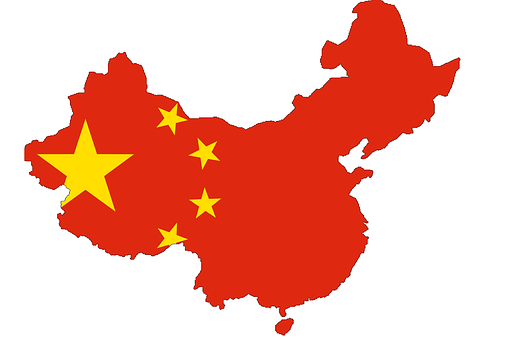
There are over a billion residents in China today. It is one of the largest populations on earth, and it is steadily seeing its privacy and anonymity eroded. Recent reports to the American news media by reporters in China suggest that today in that country the authorities are able to track the whereabouts of not just criminals or suspected terrorists, but every single ordinary citizens over the age of 15 — through a combination of fingerprint files online, facial recognition, voice recognition, and phone scanners. If you want to hide in China, reporters say, you have to leave the country. 

Other countries, of course, also use surveillance technology, but not to the extent that China does — plus other countries have laws in place to curtail too much techno-snooping without a warrant or subpoena. San Francisco city recently passed an ordinance severely limiting the use of facial recognition by the police. Many other cities are considering doing the same. 

So why is China so bent on becoming the world’s best (or–depending on how you view it–the worst) surveillance state? 

 Sinologists say the answer is not simple, nor black and white, but they agree for the most part that after eighty years of Communist rule, the Party leaders are desperate to keep control of the levers of government and feel that knowing everything about everybody is the best way to do that.

Uber to Sell Food Delivery Service in India.

0

It’s reported that Uber, the ride hailing company, is in deep discussions with an Indian company to auction off its food delivery arm in the Indian subcontinent. Inside sources say the sale is becoming urgent as the Indian food-slinging arm of the company continues to hemorrhage cash. If all goes as planned, Uber will sell its Uber Eats India to a native food delivery service named Zomato. While everything about the pending sale is very hush-hush, anonymous sources inside the company say that the sale could be completed by as early as the end of this week.

Uber Eats India is valued at around $400 million.

The chief executive of Uber, Dara Khosrowshahi, is attempting to cut back on money-draining parts of the company to show investors that it is still a very profitable proposition. Many investors have been complaining, both in public meetings and behind closed doors, that Uber needs to reconfigure its balance sheet since going public six months ago.

Their initial public offering this past spring was not a howling success, as investors began queuing up to ask about why the company was not on a solid footing yet when it came to profit margins. The whisper on Wall Street today is that Uber is underfunded and overextended, and needs severe pruning to get back on top of the game.