
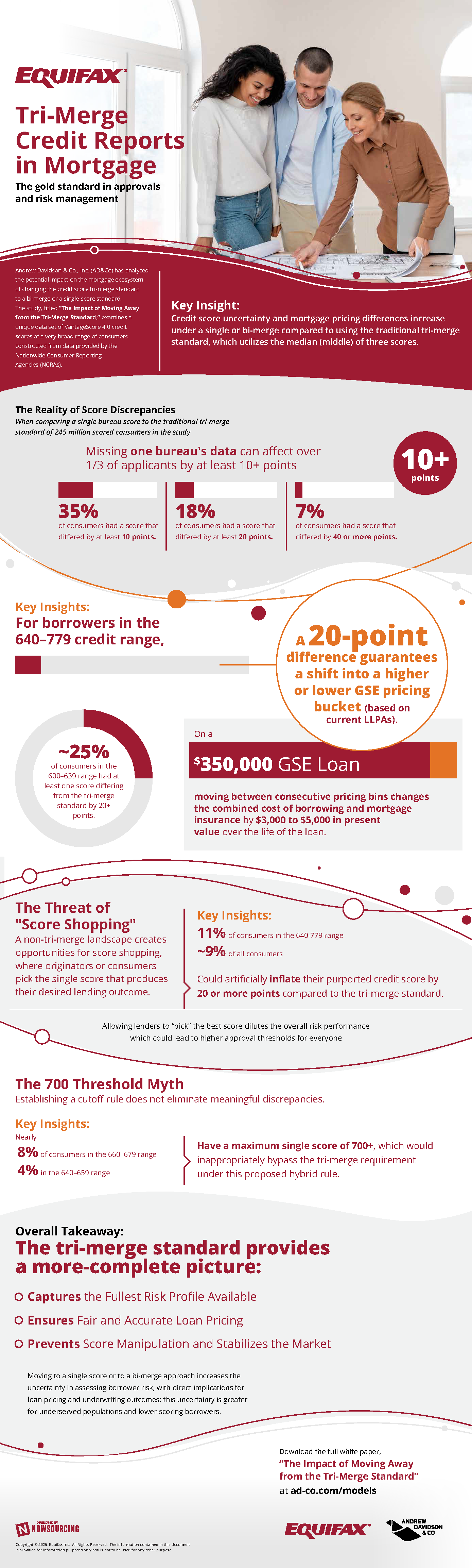
When it comes to pricing a loan, the more information the better. So, when it comes time to price a mortgage, lenders have traditionally relied on tri-merge credit reports. This type of report works by ordering credit information from the 3 major bureaus, TransUnion, Equifax, and Experian. After compressively reviewing a risk to determine eligibility, lenders will take the median credit score from the 3 bureaus to ensure accuracy.
However, some lenders have transitioned to a bi-merge credit report, which uses only 2 of the credit bureaus. This has caused mortgage prices to vary much more. Because lenders are only using 2 bureaus, different information could be found on different bureaus. If a lender ordered a report from TransUnion and Experian only, they may miss a major red flag that Equifax discovered. Therefore, two lenders could have wildly different prices based on whether or not they ordered an Equifax credit report.
Ultimately, mortgage pricing is incredibly complicated. To ensure that prospective borrowers are getting the right rate, as much information as possible must be obtained. Different credit scores and incomplete financial history can result in lenders or borrowers being overcharged or leaving money on the table. The only way to ensure proper mortgage prices is for lenders to keep using tri-merge credit reports.
Source: Equifax