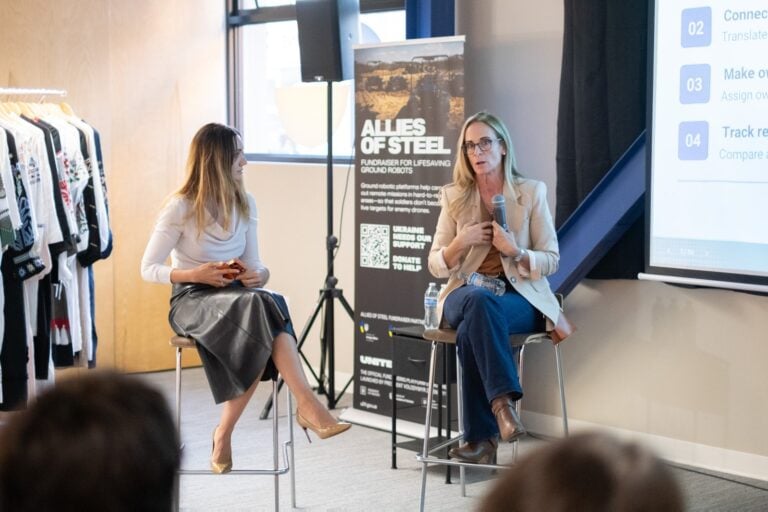
Ask a room of executives who owns the return on a project once it gets approved, and you will often hear silence. Aly Owens put that question on the agenda at SF Tech Week this October, when her company, Uprali, hosted a session called “Who Owns ROI?” Her answer is blunt. In most companies, nobody does.
Owens worked as a senior product manager at large technology companies for more than a decade. On one launch, leadership handed her team a savings target for a new feature and gave them no access to the logic behind it. Leadership had already thrown out most of the team’s earlier plans. Six months after launch, she says, nobody could trace the savings back to the feature.
“Everyone was accountable for a number nobody could explain.”
The AI spending problem
That gap costs more now than it did five years ago. Companies are funding AI initiatives at a pace their planning tools were never built for, and the early returns look thin. In 2025, MIT researchers reported that 95 percent of the organizations they studied had seen no measurable return on their generative AI spending.
Owens aims her argument at investors as much as at finance chiefs: a lot of that missing return was never traceable to begin with. A savings figure lands in a slide deck, the deck wins approval, and the reasoning behind the figure vanishes with the meeting.
Uprali puts that reasoning on the record. The company describes its platform as AI-native investment infrastructure for finance and business teams. Each proposal sits in Uprali as a driver-based case holding the assumptions, the data behind them, the sign-off from each department and a named owner for each part. Teams compare return, risk and strategic fit across competing bets before they commit money.
After a project ships, Uprali maps actual results back to the original case and feeds the differences into the next round of planning. It also records how each team works, including the exceptions and edge cases that benchmarks miss. An AI agent gathers inputs, suggests assumptions inside limits that finance sets, and drafts the model.
A founding team built in a classroom
Owens founded UpskillPM, a cohort-based program that teaches product management and building with AI. Ruslana Deykun, then a director of finance, enrolled as a student and built her first product in the course. She later left her job to start Uprali with her former teacher.
“She came in knowing how the numbers should work. The course gave her a way to turn that into a product.”
The third co-founder, Vadim Geshel, serves as Uprali’s CTO. He co-founded the recipe platform Yummly and served as its chief technology officer.
Before building the full product, the founders held 28 discovery interviews with FP&A leaders, finance executives, product leaders, operators and founders. They came away convinced the problem is as much about people as about math. Finance, product, marketing and legal each make different assumptions and answer to different incentives. Seniority and the urge to avoid conflict stop teams from challenging a number. Software that ignores those differences, Owens argues, produces tidy forecasts that nobody believes.
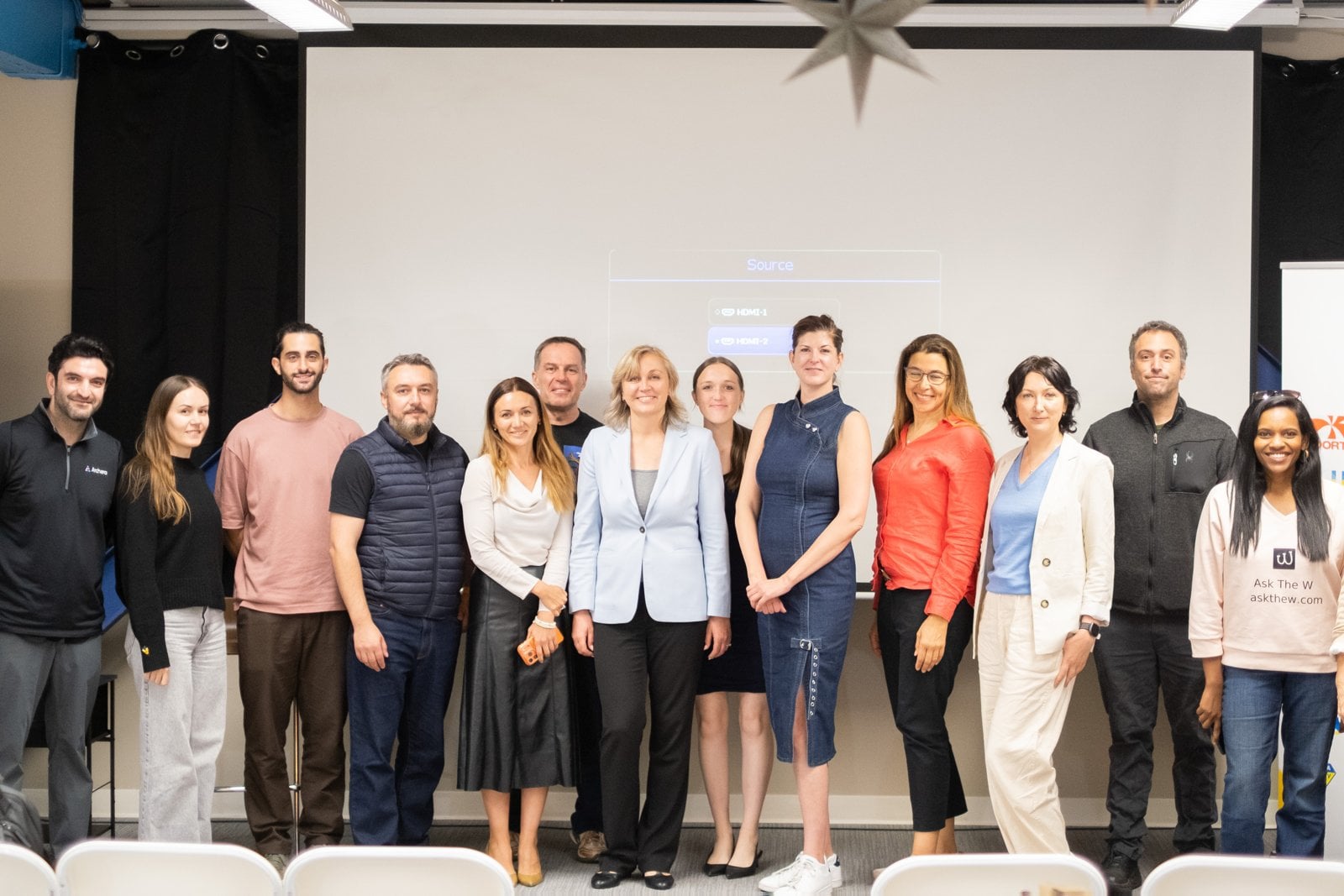
The office she is building for
Owens’s longer view is the part most likely to unsettle a boardroom. She expects AI agents to hold banking access and identities of their own, and robots to work in offices beside people, badged in and taking part in decisions.
“It’s not necessarily the world I hope to see, but I think it might be.”
If software agents start proposing and approving spend, someone has to verify which decisions came from a person and which came from a machine, and who answers for each one. Owens names cybersecurity as the weak point in that future and expects cryptography to close part of the gap. She wants Uprali built for that workplace from the start.
Uprali starts with finance because finance decides whether a project lives or dies. Ruslana Deykun, the CEO of Uprali and a financial director in the past, expects companies to run more project bets than ever while AI is in its infancy and the tools change month to month. In her view, the companies that pull ahead will be the ones that can see which of those bets paid off.
Aly Owens’ advice to other founders cuts against startup folklore. Building a product, she says, is easier than building a good business. Pick the right problem, the right people to build with and the clients who need your help.
What comes next
Uprali is recruiting design partners to pilot real business cases. The founders provide hands-on FP&A support and want to collaborate with companies of various sizes.
“A forecast should be a promise a team can examine, not a number handed down.”
Uprali is a collaborative platform that helps companies make better financial project bets. Learn more at uprali.ai.