Home Blog Page 74

The History Of Jazz Music

0

Jazz music has been around for centuries and has had a profound influence on many different genres of music. In this blog post, we will explore the history of jazz music, from its origins to its influence in the twentieth century. We will also look at how jazz music has been shaped by its various influences and how it has become the genre it is today. By the end of this blog post, you should have a better understanding of the history of jazz music and its significance in today’s music scene.

Visit Here: Read entire article at Washington Post

Origins Of Jazz Music

Jazz is one of the most beloved and influential styles of music in America. Originating in New Orleans and other southern states, jazz has had a profound impact on a wide range of genres of music, including early ragtime, gospel, and blues. Today, there are several major subgenres of jazz including swing, bebop and cool jazz. And while the origins of jazz are obscure to some extent, it’s clear that this style has had a lasting impact on popular culture and American music in general.

jazz music

Jazz played an important role in the Civil Rights Movement in America. In fact, many historians believe that it was jazz music that helped to bring about change on a large scale. Jazz performers like Louis Armstrong, Duke Ellington and Billie Holiday often spoke out against segregation and racism, inspiring others to do the same through their music. In addition to its cultural impact on American music, jazz has also greatly influenced popular culture across the globe. From movie soundtracks to hip-hop dance moves, there’s no stopping the influence of jazz!

How Jazz Evolved Into The Genre It Is Today

Jazz is one of America’s most beloved and influential genres of music. Its origins date back to the early 1800s, when African-American slaves in the United States began to mix European classical music with their traditional African music. This fusion of styles soon became known as Jazz, and it quickly gained a following among American audiences.

Over the years, jazz has evolved into a rich and diverse genre that incorporates many key instruments and styles. A jazz ensemble typically includes a saxophone, trumpet, piano, drums, and bass guitar. Major styles of jazz include swing (a popular form that emerged in the 1930s), bebop (which flourished during the 1940s), cool (popularized in the 1950s), hard bop (developed in the 1960s), soul jazz (associated with late-1960s/early-1970s funk bassist Jaco Pastorius), Latin jazz (spanning from Afro-Cuban roots to more modern influences), and contemporary jazz (seen as a reaction to funk).

Notable jazz artists have made significant contributions to the genre over its history. Duke Ellington was one of the most influential composers and bandleaders in jazz history, while Miles Davis is considered one of the greatest trumpet players ever. Betty Carter was one of the first female saxophonists in jazz history, while Louis Armstrong is widely considered one of history’s greatest musicians. Modern jazz has also benefited from technological innovations such as synthesizers and drum machines – which have allowed for more creative freedom and experimentation within the genre.

Jazz has always had social implications – both positive (such as promoting social activism) and negative (such as contributing to racism). However, its importance continues to grow both culturally and politically across all corners of society today. Whether you’re a fan of old school swing or modern day fusion jazz, there’s no doubt that this vibrant genre has something for everyone!

Jazz In The 20th Century

There’s no doubt that jazz is one of the most popular music genres in the world today. In fact, it has been around for centuries and has seen many transformations over that time. In this section, we’ll take a look at how jazz rose to prominence in the early 20th century and how its development during this period influenced music across different regions and countries.

Jazz as a genre started to take off in the early 20th century as more people became interested in it. This was thanks to a number of factors, including the rise of Swing music as a popular style, blues and ragtime’s influence on jazz, and the development of rhythm sections and styles across different regions.

One key moment in jazz’s history was the emergence of New Orleans Jazz. This genre combined elements of blues with traditional European classical music and became hugely popular throughout the 1920s. Big Band era jazz followed soon after, with bands such as Duke Ellington and Louis Armstrong becoming household names. Hard Bop emerged during this time too, featuring more complex rhythms and faster tempos that helped to break down traditional barriers between rock ‘n’ roll and jazz.

As Jazz continued to develop into the middle to late 20th century, it began to fuse with other genres such as funk, soulful ballads, Latin rhythms, electronica, hip-hop etc., creating something new and exciting every day. Improvisation is definitely one of the key elements behind this ongoing fusion process – without it, many of these eclectic collaborations would simply not exist!

The Influence Of Jazz Music

Jazz is a genre of music that has a deep history dating back to the late 1800s. Originating in New Orleans, USA, jazz is a musical mixture of African and European traditions that includes styles such as swing, bebop, and ragtime. Its influence can be seen in all forms of music from classical to pop, and its sounds have deeply inspired other genres such as rock, hip hop, and Latin music. Jazz musicians have made significant contributions to music history with their creativity and experimentation.

Read More: How Producers Use Music History to Create New Sounds

Below, we will take a look at some of the most influential aspects of jazz music. We’ll discuss how it combines these two musical traditions to create something new and unique, as well as some of the improvisation techniques that have been developed over the years. Finally, we’ll give you some tips on how you can explore more about this amazing genre for yourself!

To Wrap Things Up

Jazz is an influential and beloved genre of music that has stood the test of time. From its origins in New Orleans to its influence on popular culture and music around the world, jazz has been instrumental in shaping the musical landscape for centuries. Its distinct combination of styles, musicians, and instruments has created something truly unique that continues to evolve with each passing day. If you are interested in learning more about jazz and its history, there are plenty of resources available – from books to online tutorials – to help you explore this ever-evolving style of music. So, why not start today?

Get Smart: Modernize Your Home with Smart Devices

0

Smart devices can be found in almost every room of a modern house. Living rooms can play host to speakers, televisions, and hubs such as the Amazon Echo. Bedrooms may have smart smoke detectors, indoor smartbulbs, and window shades. The kitchen is a hotspot for smart devices such as refrigerators, dishwashers, and ovens. Even bathrooms are now beginning to be equipped with smart mirrors and showerheads. 

All of these devices help make up the 175 million smart homes worldwide. This number will only continue to grow as younger generations reach home buying age. Millennials and Gen Z are especially receptive to smart technology. 80% of respondents in these generations say that adopting smart home technology is a huge positive, compared to 69% of baby boomers. They are especially drawn to the cost effectiveness of smart devices, along with the additional security they can provide for a home. 

Home devices are only expected to become faster, less expensive, and more streamlined in the future. By 2026, the market for this technology will grow to $200 billion, meaning there is lots of growth for this industry. Touchless technology, high-speed connections, and greater privacy protections are all on the horizon for smart homes.

Smart Devices and Homes of the Future

Food, Rent, and Textbooks: How College Students are Struggling with Basic Needs Insecurity

0

A national student financial wellness survey in 2020 uncovered a crisis among college students. Nearly 3 in 5 students surveyed struggled to afford food, shelter, tech devices, and other living essentials. More than half of respondents showed signs of food insecurity while over 10% reported experiencing homelessness. This collection of problems is called basic needs insecurity

Students suffering from basic needs insecurity deal with extensive mental and emotional harm from their situation. On top of that, they often face challenges academically as well. 1 in 4 of these students had to drop classes to focus on basic necessities. Less than 20% of students in this group are able to graduate in 5 years or less.

America prides itself on offering social mobility to its citizens. And it’s still true that low income individuals are 5 times more likely to escape poverty with a college degree. But acquiring that degree is a daunting task. Those unable to graduate leave college in a worse position than they entered due to debt. 

It’s true that many students qualify for food or housing assistance, but up to 49% of students don’t know about it. Those that do don’t know how to apply or believe they’re ineligible.

Supporting Student Basic Needs
Source: Kentucky Student Success Collaborative

Why Companies Should Prioritize Transparency

0

Post-Breach Disclosure Risks: Why Companies Should Prioritize Transparency

In today’s digital age, it’s not a matter of “if” but “when” an organization will experience a data breach. With cyber threats becoming more complex and sophisticated, data breaches are becoming increasingly common, with half of the organizations experiencing one in 2022. Despite constant warnings from cyber authorities that post-breach disclosures are necessary for organizations to improve their security posture, many still choose to withhold information.

Reputational Damage and Financial Impacts: Top Concerns for Companies

According to Kenny Riley, CEO of Velocity IT in McKinney, TX, “Transparency is key in building trust with customers, vendors, and shareholders. The more transparent organizations are with their cybersecurity practices, the more secure they will become. This can ultimately lead to better business outcomes.”

Robert Giannini, CEO of GiaSpace (https://giaspace.com/it-services-ocala/), agrees that “Data breaches are no longer a question of ‘if,’ but ‘when.’ It’s not a matter of whether a company will experience a breach, but how it will respond to it. By prioritizing transparency, organizations can mitigate the damage and build trust with their stakeholders.”

However, Arctic Wolf’s recent report revealed that nearly three-quarters of breached organizations opted not to disclose the information, with IT professionals citing reputational damage, career impact, potential follow-up breaches, insurance premium hikes, and a lack of legal obligations as their top reasons for not doing so. While these concerns are valid, they ultimately do more harm than good. The lack of transparency prevents organizations from learning and implementing better security practices and puts them at risk for future incidents.

Troy Drever, CEO of Pure IT in Calgary, notes that “A breach doesn’t just impact an organization’s reputation; it also puts its customers and partners at risk. By being transparent, organizations can demonstrate their commitment to security and take the necessary steps to protect their stakeholders.”

Removing the Stigma Around Data Breach Disclosure

Despite the challenges of data breach disclosure, organizations need to realize that they are not alone. No company is immune to cyber incidents, and a breach should not be seen as a sign of weakness. Instead, transparency can help organizations show their commitment to security and demonstrate that they take the issue seriously. By being transparent, organizations can also build trust with customers, partners, and stakeholders.

To remove the stigma around data breach disclosure, organizations need to shift their mindset from one of blame and shame to one of transparency and learning. Instead of focusing solely on the negative consequences of a breach, companies should also focus on the positive outcomes that can come from transparency. For example, by being transparent, organizations can identify the root cause of the breach and take steps to prevent similar incidents from happening in the future.

Ransomware: The Top Cybersecurity Concern

Ransomware remains the top cybersecurity concern for organizations in 2023, according to the Arctic Wolf report. More than two in five organizations surveyed reported being hit by a ransomware attack last year. In response, many companies are paying the ransom, despite warnings against it. The report found that nearly three-quarters of organizations impacted by ransomware attacks last year paid some part of the ransom either directly or through their insurance provider. While the circumstances surrounding each attack may be different, paying the ransom only fuels the ransomware economy and does not guarantee that the attackers will decrypt the data.

Instead of paying ransoms, organizations should focus on preventing ransomware attacks from happening in the first place. This can be achieved through a combination of employee education, implementing strong security measures, such as multi-factor authentication and network segmentation, and regular backups of critical data. By taking a proactive approach to cybersecurity, organizations can reduce the risk of falling victim to ransomware attacks and minimize the potential impact of a breach.

Prioritizing Transparency in the Face of Cyber Threats

In conclusion, data breach disclosure and transparency are critical for organizations to mitigate cyber threats and improve their security posture. With cyber incidents becoming increasingly common, no company is immune to the risk. While concerns such as reputational damage and financial impacts are valid, they should not prevent organizations from being transparent. By being upfront about data breaches, companies can build trust with customers and stakeholders and take proactive steps to prevent future incidents.

As Kenny Riley, Robert Giannini, and Troy Drever have demonstrated, industry leaders recognize the importance of transparency in building trust and mitigating cyber risks. The key to success is to prioritize transparency and shift the focus from blame to learning. By doing so, companies can identify and address the root cause of security incidents, implement better security practices, and ultimately improve their security posture.

With ransomware attacks on the rise, it’s more important than ever for organizations to focus on prevention and mitigation strategies. By taking a proactive approach, companies can reduce the risk of falling victim to ransomware and other cyber threats.

In summary, transparency is key in the fight against cyber threats. Companies that prioritize transparency and take a proactive approach to cybersecurity will be better equipped to mitigate risk and protect their stakeholders.

The SpaceView: A Work of Inner Beauty

0

In any normal line of thinking, the subject of watches and shoes would connect like apples and oranges. However, at this moment in history, we learn how the meaningful gift of the Accutron wrist watch, rooted in disruptive technology, led to the creation of a culturally iconic sneaker. It started on October 25, 1960, when Bulova released the first and most advanced watch in the world. 

At a time when electric watches were growing in trend, the Accutron broke the mold by having a “window” to see the inner workings of the watch as it functions. This dynamic view lent to the name of the watch dubbed “The Spaceview.” When it was released worldwide in 1976, over 5 million of these models were sold. 

However, little did the creators know that years later, this timepiece inspired another great discovery. A former architect named Tinker Hatfield was inspired by the transparent look of the Spaceview watch and used this kind of concept for the shoe company Nike. He incorporated a transparent bubble at the bottom of the shoe so you can see the inside of the shoe. 

With its floaty appearance, this shoe was named the Nike Air 1. Hatfield went into further detail by stating, “The shoe was designed to breathe, be flexible, and fit well but the fact it had the air window in the sole and the frame color around it meant it looked a lot different than other shoes in its day.”

Learn more about how a wristwatch inspired a design revolution in the infographic below:

A Gift That Inspired History

A Look at Focus Drinks

0

It seems no matter who you meet when you ask what gives them energy throughout the day, the answer would likely be something with caffeine in it. Whether it would be coffee, tea, energy drinks, or even caffeine pills. In any form, it’s the worldwide staple of the “get up and go.” However, what if you were told that not only caffeine is only doing half of what you want it to do but there is a more efficient formula that can provide not only energy but focus? 

To elaborate, it’s true that our bodies need the energy to be able to function and perform tasks well but to do them efficiently our brains need focus to make sure the energy has somewhere to go. While caffeine can deliver the former, it does not provide the latter. Studies show that caffeine has been known to alter sleep schedules, lower mental awareness, and reduce reaction times. Although, there is a science-backed formula being developed that provides both energy and focus. 
Dubbed “The Wake-Up Formula,”  this solution uses a blend of herbs and fruit called Nootropics. Nootropics are substances in natural, supplement, or food and beverage form used to increase cognitive function. This can include your mood, productivity, or attention span. Noted ingredients in the Wake-Up Formula are Ginkgo Biloba(promotes blood circulation), Elderberry: (anti-viral and antioxidant), and Guarana (mental and physical stimulator). Moreover, 5 clinical studies show this formula enhances focus, vigilance, and work performance. It also starts working within minutes and lasts for more than 2 hours. Focus drinks work better than caffeine alone, builds brain function (processing speed) when used consistently, and does not increase heart rate or blood pressure, or build tolerance over time.

How Focus Can Improve Your Life
Provided by:
DrinkBioLift.com

Ross Levinsohn, Sports Illustrated CEO, Recognizes Responsibility in Using AI for Publication

0

Digital transformation is causing disruption in virtually every industry, including publication, mentioned Ross Levinsohn, Sports Illustrated CEO, during recent interviews. Specifically, he addressed the issues faced by Arena Group’s publications by adding artificial intelligence (AI) capabilities to its business. While recognizing AI’s capabilities as part of publication processes, Levinsohn also acknowledged potential drawbacks. By implementing AI into the publication responsibly, he is making sure that the publication doesn’t run afoul of issues the technology may cause, an obstacle faced by other publications.

Arena Group manages many major publications including Parade, Men’s Journal, TheStreet, and Sports Illustrated. As Sports Illustrated CEO, Ross Levinsohn has monitored AI’s progress creating stories for major publications and is approaching the technology in Sports Illustrated with appropriate caution and responsibility. As Arena Group partners with Jasper and Nota to increase production speed and the breadth of its offerings by leveraging AI, Levinsohn is making sure that using the technology is done with an eye toward responsible publication.

Another Arena Group brand, Men’s Journal, recently created AI-assisted articles using OpenAI, a ChatGPT tool. The magazine’s articles “Proven Tips to Help You Run Your Fastest Mile Yet” and “What All Men Should Know About Low Testosterone” were created with bylines that attribute the articles to Men’s Fitness Editors. However, unlike other publications, the magazine has chosen to include a disclaimer referencing the AI origins of the articles: “This article is a curation of expert advice from Men’s Fitness, using deep-learning tools for retrieval combined with OpenAI’s large language model for various stages of the workflow. This article was reviewed and fact checked by our editorial team.”

However, Ross Levinsohn is taking the process a step further, training Sports Illustrated‘s AI language models using the company’s existing archives so the generated stories remain in line with the magazine’s brand. Once new stories are created, they are edited by humans to ensure the facts are correct and in line with the publication’s preferred tone, style, and voice. This will, hopefully, help Sports Illustrated avoid the issues faced by CNET after revelations showed issues with the accuracy of their AI-generated articles.

CNET’s new owner Red Ventures pushed the brand into various economizing schemes, including publishing AI-generated content without review. Criticism soon arose over the lack of proper disclosure. An internal review showed over half of the AI-generated articles included errors that needed to be corrected. It’s been noted by many experts that AI language tools are capable of generating plausible information that is often incorrect, as noted by computer science professor Arvind Narayanan. 

Arena Group and Ross Levinsohn do not want to replace the company’s existing journalists but instead are aiming to create additional “enterprise value for our brands and customers,” per Levinsohn. The existing plan is to use the technology to increase workflow efficiency, with the idea to extend the capabilities of the company’s existing writers while allowing a broader range of topics to be covered by the publication.Following the announcement, Arena Group Holdings’ share prices rose but are expected to settle again similar to the activity seen when BuzzFeed shared comparable news. Ross Levinsohn only sees good in using AI responsibly, mentioning during a Wall Street Journal interview, “It’s not about ‘crank out AI content and do as much as you can.’ Google will penalize you for that and more isn’t better; better is better.” With today’s mentality that creating more content now is an imperative, this type of responsibility in the face of pervasive and irresponsible technology use is reassuring.

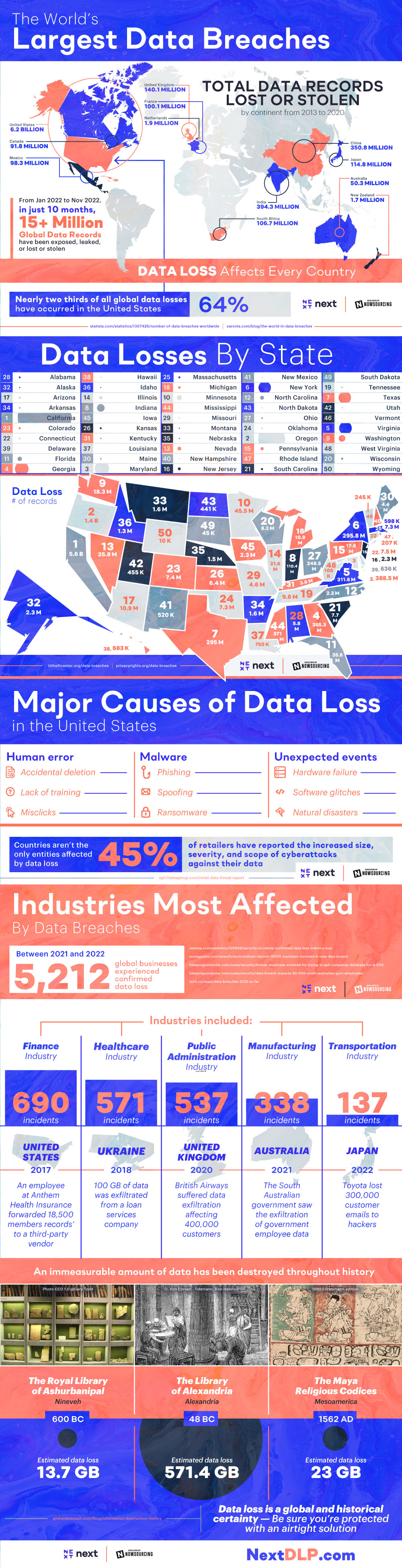
Making Sense of Massive Data Losses

0

How often do you hear about data insecurity today? It’s true that computers and the internet have allowed humans to generate and exchange data more than ever before. It’s also true that this same interconnectedness leaves us vulnerable to increasingly sophisticated cyberattacks. However, it is not true that data loss is a uniquely modern problem. The burning of the library of Alexandria in 48 BC cost the world an estimated 571 gigabytes of data. 

Flash forward to 2022, and it doesn’t take a fire to erase millions of records from history. All it takes is one misclick from a poorly trained worker to erase an important file. The state of California alone lost 5.6 billion records in 2022. These digital records could have contained anything, from financial transactions to health insurance details. Finance and healthcare are the 2 biggest industries suffering from data loss.

While human error is the most common way to lose data, their lack of training ties into the issue of cyberattacks. Recognizing phishing is an important skill for the modern workforce. Clicking on one wrong link can introduce spoofing and ransomware to a system, leading to devastating aftermath. Data literacy is a must in 2023.

The World's Largest Data Breaches

Maximizing Marketing Efforts for Law Firms with ChatGPT: The AI-Powered Tool for Streamlining and Attracting New Clients

0

Artificial Intelligence (AI) is a technology that has been the subject of much debate in recent years. While some people fear AI will replace human jobs, others view AI as a significant tool that can benefit businesses. One such tool is ChatGPT, the latest in AI chatbot technology. This guide will discuss ChatGPT and how it can help law firms increase their marketing and attract more clients.

ChatGPT is an advanced AI language model developed by OpenAI. It is capable of understanding and generating human-like text in a conversational tone. This technology can be integrated into a law firm’s website or mobile app to provide clients with instant answers to their questions and provide relevant information about the firm’s services.

Law firms can use ChatGPT to improve client engagement and provide an exceptional customer experience. By answering client questions in real time and providing relevant information, ChatGPT can help law firms establish themselves as experts in their field and build trust with their clients. This, in turn, can help law firms generate more leads and attract new clients.

Additionally, ChatGPT can help law firms save time and increase efficiency. By handling routine client inquiries, ChatGPT can free up time for lawyers to focus on more important tasks. This can help law firms improve their productivity and increase their bottom line.

What Is ChatGPT

ChatGPT, short for Generative Pre-trained Transformer, is a cutting-edge AI chatbot developed by OpenAI, which was launched in November 2022. It enables users to engage in written dialogue with the AI system.

“Since its launch, ChatGPT has received widespread recognition and praise from marketers, business owners, and regular internet users due to its interactive technology. Its ability to respond to questions and prompts with answers, information, formulas, content ideas, and more has proven to be a valuable tool for businesses,” states Robert Giannini, a digital transformation expert with GiaSpace who offers IT services in Lakeland and across Florida.

Business owners have discovered numerous applications for ChatGPT, including its ability to create outlines for blog posts, generate content topics, write emails, and assist with day-to-day operations. This AI tool is a game changer for businesses looking to streamline their processes and increase productivity.

ChatGPT’s Capabilities and Challenges for the Legal Industry

“ChatGPT has been garnering a lot of attention for its ability to write content, create templates, and draft technical documents, making it a valuable tool for the legal field. Its ease of use and ability to provide straightforward information makes it an attractive option for lawyers looking to streamline their manual tasks and save time,” states Legal IT expert Nick Nouri with Compunet InfoTech in Vancouver, Canada.

However, it is important to acknowledge the limitations of ChatGPT when it comes to legal applications. Firstly, the tool is only as good as the data it has access to. If the data is inaccurate or limited, this could result in inaccurate answers and information.

Furthermore, the legal industry relies heavily on trust, authority, and competence, and lawyers are held to a high standard regarding their experience and technical expertise. As such, all ChatGPT results should be carefully examined before being used in client-facing documents, marketing materials, etc.

Another issue to consider is data confidentiality. It is unclear how ChatGPT stores its data – whether it is natively stored, stored via third parties, or shared with advertisers. Law firms should exercise caution and avoid including confidential or identifying information in their ChatGPT prompts.

Maximizing ChatGPT to Enhance Law Firm Business Development

Artificial Intelligence technology has been transforming the business landscape by automating repetitive tasks and freeing time for more strategic pursuits. The legal industry is no exception, and lawyers can leverage the latest AI tool, ChatGPT, to enhance their marketing efforts and attract more clients to their law firms.

Here are some guidelines on effectively utilizing ChatGPT to grow your law firm’s client base.

Blog Post Ideas

Here are some blog post ideas that a law firm can use to engage with its target audience and position itself as a thought leader in its practice area:

  1. The changing legal landscape: Discussing the latest legal developments and their impact on businesses and individuals
  2. Legal compliance and regulations: Providing insight and guidance on staying compliant with the latest legal requirements
  3. Common legal issues faced by small businesses: Addressing the most frequent legal challenges faced by small businesses and providing practical solutions
  4. Navigating employment law: Discussing the basics of employment law and providing tips for avoiding common pitfalls
  5. Estate planning: Outlining the benefits of estate planning and the different options available for creating a solid plan
  6. Protecting intellectual property: Explaining the importance of protecting intellectual property and the steps businesses and individuals can take to secure their assets
  7. Cybersecurity and data privacy: Discussing the latest cyber threats and providing tips for keeping sensitive information secure
  8. Litigation trends and case studies: Analyzing recent court cases and providing insights on the latest litigation trends
  9. Understanding contracts: Breaking down the basics of contract law and providing tips for negotiating and drafting effective contracts
  10. Access to justice: Discuss the barriers to accessing justice and the initiatives to increase access to legal services for all.

These are just a few examples, and the list can be customized based on the law firm’s area of expertise and target audience.

Leveraging ChatGPT for Website Optimization in Law Firms

Law firms can enhance their online presence by having optimized website service pages tailored to their specific legal services.

According to law firm IT and digital transformation specialist Aaron Kane with CTI Technology in Chicago, “ChatGPT can assist in identifying these pages by providing suggestions based on the law firm’s practice area.”

For instance, a corporate lawyer could request ChatGPT to suggest service pages for Contracts, Business Formation, and Trademark Registration. Additionally, ChatGPT might propose additional pages, such as an FAQ section or a comprehensive Resource library, that would benefit the website.

Having well-crafted and informative service pages can attract potential clients who are actively searching for legal services online. These pages serve as a platform to showcase the firm’s expertise and provide insights into its services, helping clients make informed decisions about working with the firm.

Boost Credibility with ChatGPT’s Source Discovery

In the legal industry, credibility is key. To gain the trust of potential clients and establish your law firm as a reliable authority, it’s important to include credible sources in your content and marketing materials. This is where ChatGPT can help.

ChatGPT’s source discovery function can quickly provide you with a list of reputable sources for your research, including studies from government agencies, universities, and other authoritative organizations. This saves you time compared to manually searching for sources, and you can easily request sources for multiple topics within the chatbot.

Incorporating sources from credible sources into your content will boost the credibility of your law firm and demonstrate your expertise to potential clients. So why wait? Start using ChatGPT to elevate the quality and reliability of your legal content today.

Keyword Research with ChatGPT: Categorizing User Intent for Law Firm SEO

Effective law firm SEO requires a deep understanding of your potential clients’ keywords to search for services like yours. ChatGPT can assist with this process by organizing your keyword research and even providing an estimate of the organic search volume for each keyword.

Search Intent refers to categorizing keywords based on the purpose behind the user’s search. For example, the keywords may be categorized as Commercial, Transactional, or Informative. By organizing your keywords by search intent, ChatGPT can help you determine the type of content you should create for each keyword. For example, you may want to create a landing page for commercial keywords, a service page for transactional keywords, or a blog post for informational keywords.

It’s important to note that while ChatGPT can provide useful information, it’s recommended to validate its findings with a more reliable SEO tool, such as SEMrush.

Get Creative with Your Marketing Copy through ChatGPT

Not everyone has a talent for writing compelling marketing copy. But, with ChatGPT, you can easily craft effective ad messages for your Facebook, LinkedIn, and other marketing campaigns.

You need to provide ChatGPT with a clear and detailed prompt to get the best results. For instance, you can request, “Write a friendly and funny 100-word Facebook ad promoting foreclosure defense services in Oregon, including a call-to-action.”

This will help the chatbot produce the right tone, voice, and messaging for your target audience. Experiment with different prompts to see what resonates with your audience, and always track your ad analytics to optimize for maximum impact. With ChatGPT, you can take your advertising efforts to the next level.

The Importance of Follow-Up in Law Firm Marketing

A well-known phrase in marketing still holds true, particularly for law firms: “The money is in the follow-up.”

Nurturing leads into clients is crucial for a successful law practice, and follow-up is key to making that happen. Without timely follow-up, potential clients may forget about your firm or perceive a lack of interest in their case.

With ChatGPT, creating effective follow-up emails and client correspondence is a breeze. You can generate customized email templates with just a few prompts. Here are some examples:

“Compose an email to a potential foreclosure defense client who has signed up for my email list, including a call-to-action to schedule a free consultation with an attorney.”

“Create three follow-up email templates to send to potential law firm clients who subscribed to our monthly newsletter.”

“Write a 100-word email in response to a potential client who has inquired about the legal services we offer, including Divorce Law, Family Law, Adoption Law, and Estate Planning.

Respond To Client Feedback

Boost your online presence and improve customer relations with ChatGPT’s review response capabilities. The chatbot can efficiently craft replies to customer reviews, demonstrating to past clients and future prospects that your firm is attentive and engaged online.

By responding to both positive and negative reviews, you can showcase your commitment to customer satisfaction and reinforce the credibility of your business. Negative reviews also provide valuable feedback, which you can use to improve and enhance your services for future clients.

Effortless Social Media Strategy with ChatGPT

Keeping up with multiple social media platforms can be a daunting task, but with ChatGPT, it’s now a breeze.

With ChatGPT by your side, you can easily plan and execute your social media content strategy across various platforms, such as Facebook, LinkedIn, Instagram, and Twitter. The chatbot can assist you in generating ideas and creating content to attract new clients and showcase your law firm’s expertise.

Here are a few prompts to get you started:

“What are five creative ways to promote my latest law firm blog post on social media?”

“What steps can I take to increase my law firm’s Facebook following?”

“Generate three catchy Instagram captions to accompany an image of my family law office”

“Write six entertaining Twitter posts about the daily life of a lawyer”

Wrapping Up

In conclusion, ChatGPT is a powerful AI tool that can benefit law firms significantly. ChatGPT can help law firms attract new clients and grow their businesses by improving client engagement, building trust, and increasing efficiency. So, don’t be afraid of AI. Embrace it and see how it can help your law firm reach new heights!

Law firms can greatly benefit from utilizing ChatGPT as a time-saving tool for marketing. From brainstorming blog ideas, composing marketing emails, and creating a solid social media strategy, ChatGPT can aid your firm in accomplishing more. With its AI capabilities, the potential uses for ChatGPT are numerous – it all comes down to knowing what to ask for.

Phaneesh Murthy and Primentor ensure that disruptive technologies don’t disrupt business

0

Phaneesh Murthy has been helping businesses achieve greater efficiency, innovation, and cost-savings for over three decades. His strategy consulting firm, Primentor, is renowned for its ability to enhance organizational health using tried-and-true, data-backed approaches. Primentor shines especially in the realm of disruptive business growth, deploying an array of tools to ensure that firms are equipped to be future-proof.

In recent years, game-changing disruptive technologies like artificial intelligence, blockchain, and ever-evolving e-commerce practices have left indelible marks on the business landscape. Entrepreneurs who hustled to leverage these technologies have enjoyed the first crack at emerging markets. Established organizations, often slower off the mark in these scenarios, lose out on opportunities to reach new customers or refine processes with new tools. Disruptive technologies’ influence is strong, and those who do not create roadmaps for the changes ahead can find themselves left behind as their competitors succeed.

Primentor is the solution to the disruptive technologies problem that faces many organizations. Helmed by Phaneesh Murthy, a leader whose experience in successfully restructuring Fortune 500 companies has made him a revered business strategist, Primentor has corporate dynamism in its very DNA. Primentor helps firms face the challenges presented by disruptive technologies head-on, and these organizations won’t just be weathering the storm: they’ll be ready to use these technologies to dominate in their industry. With Primentor, a threat becomes a market advantage.

Primentor helps organizations accept and incorporate disruptive technologies using a three-pronged implementation strategy. First, during disruption discovery, Primentor assesses the organization’s current operations and business models. Once a picture of the current business environment has been painted, Primentor scans for potential future weaknesses, leveraging deep knowledge of industry and disruptive technology trends. Once areas of concern have been identified, business impact analysis follows. In this step, Primentor maps out different scenarios, demonstrating how specific disruptive incidents could occur, and how to best respond to them. Disruption management is the name of the game in this phase: Primentor provides specific tools and strategies to the organization to intersect with disruptive technologies without losing a step.

After undergoing the first two phases, an organization is equipped to effectively manage disruption, but Primentor takes it a step further. In the final phase, innovation culture development, Primentor equips the business to not just survive, but thrive. The firm’s industry-leading framework fundamentally changes the culture of the business, encouraging new ideas, seeking the input and collaboration of different domains and industries, and creating a lifecycle structure that supports experimentation, innovation, and disruptive opportunities. This essential toolkit transforms the organization, shifting its stance from defensive to offensive. No longer dreading disruptive technologies’ effects on its business, the organization can now welcome it—and leverage the opportunities.

Primentor’s continued success in the disruptive technology space is a testament to the skills of its founder. Time and again, Phaneesh Murthy has taken low-performing businesses and made them wildly profitable, to the tune of millions, sometimes billions, of dollars. A deeply experienced consultant with knowledge gained from decades of deal-making, he has a knack for correctly reading industry trends and then successfully implementing organizational changes in response. He has built a team at Primentor that shares his vision, skill set, and innovative spirit, so it’s no surprise that Primentor is a top-flight practitioner. Organizations concerned about an aging business model know exactly where to turn.